




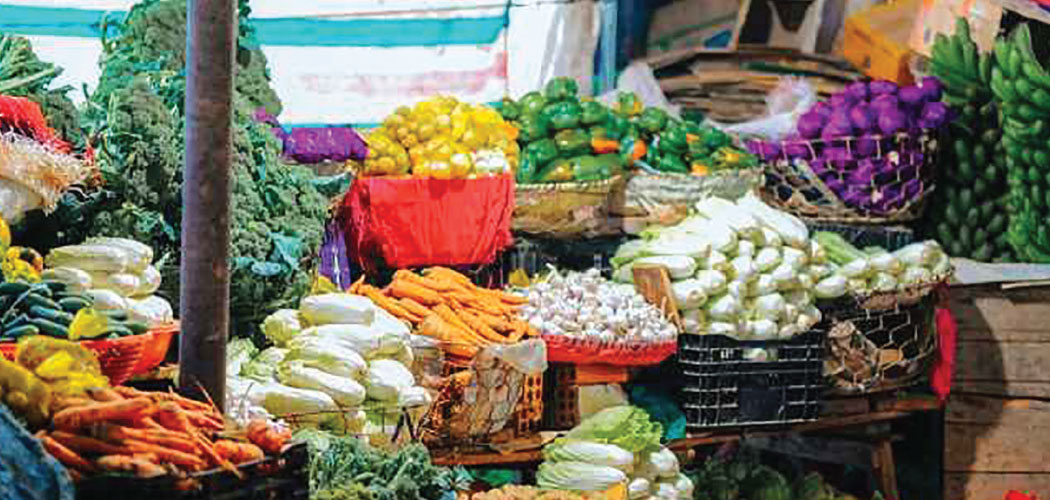
SATV, Kathmandu, Oct. 10 - The Ministry of Industry, Commerce and Supplies has assured consumers that there will be no shortage of essential commodities during the festival season, saying that supplies remain normal across the country.
Ministry spokesperson Jitendra Basnet said the government was coordinating with public enterprises and private-sector organisations to ensure the smooth supply of essential goods amid increased demand during the festivals.
According to him, private-sector representatives have assured the ministry that they have sufficient stocks of essential commodities, including rice, lentils, spices and cooking oil. The Public enterprises -- Food Management and Trading Company Limited (FMTCL) and Salt Trading Corporation (STC) also have adequate stocks of rice to meet market demand.
According to information received from the private sector and public enterprises, existing stocks would be sufficient to meet demand throughout the festival period, he said.
Besides, imports from India and other countries, except China, have continued regularly, he said.
To facilitate the supply of essential commodities and provide relief to consumers, the FMTCL and Salt Trading Corporation (STC) have been operating fair-price shops across the country.
The FMTCL has started selling essential goods at discounted rates through 193 outlets in 44 districts, offering a discount of Rs. 5 per kilogram or litre on selected daily necessities.
FMTCL Information Officer Madhav Mishra said the company was selling various consumer goods, including rice, lentils, cooking oil and sugar, through its outlets.
Consumer turnout at the outlets has been encouraging, with people purchasing goods according to their needs, he added.
The company has been selling sugar at Rs. 110 per kilogram outside the Kathmandu Valley, providing some relief to consumers. Mishra said that the FMTCL currently has 20,000 tonnes of essential commodities, including rice, wheat, cooking oil and sugar, in stock and is supplying them smoothly, even to remote areas.
He said that the FMTCL was also preparing to purchase paddy from farmers as soon as possible.
Meanwhile, the STC has been supplying sugar to retailers at Rs. 105 per kilogram, enabling them to sell it at Rs. 110 per kilogram. The intervention has also prompted private traders to reduce their prices, according to Basnet.
However, the supply of liquefied petroleum gas (LPG) has yet to return to normal in the Kathmandu Valley. Basnet said the government and Nepal Oil Corporation were working to ease the supply situation, which had shown improvement in recent days.
He expressed his confidence that supplies would return to normal soon.
The supply of other petroleum products, including petrol, diesel and aviation fuel, remains normal, he said, adding that the NOC has maintained stocks according to its storage capacity.
Imports of festival goods from China, particularly clothes, have been affected by disruptions to transport routes.
Basnet said several containers carrying such goods had been stranded at the Korala border point after recent rainfall damaged roads along the Kaligandaki Corridor.
He said the goods could not be diverted through alternative border points before the festivals.
The Tatopani customs point remains closed, while floods in the Bhotekoshi River have damaged the main trade route through the Rasuwagadhi customs point.
Nevertheless, traders have assured the government that there will be no shortage of clothes, as many had already imported goods for the festival season and still had stocks from the previous year.
Despite the generally normal supply situation, the ministry remains alert to possible price hikes amid increased festival demand.
Joint Secretary at the Ministry Basnet said the ministry had received complaints about rising prices of essential goods, particularly rice, and had instructed concerned authorities to ensure that commodities were sold at reasonable prices, taking into account costs, transportation expenses and profit margins.
Meanwhile, the Department of Commerce, Supplies and Consumer Protection has intensified market monitoring ahead of the festivals to curb the sale of adulterated and expired food items, black marketing and other irregularities.
According to Basnet, around a dozen market monitoring teams have been mobilised daily across the Kathmandu Valley.
The teams have been imposing fines of up to Rs. 300,000 on businesses found violating market regulations.