




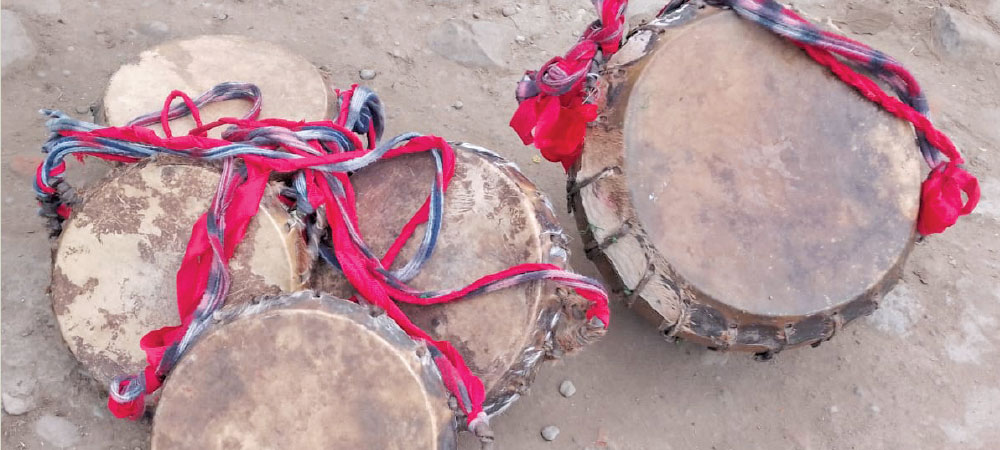
SATV, Kathmandu, July. 07 - The sound of traditional damaha drums is once again echoing through many villages in Bajura after the instrument had gradually disappeared from rural communities over the past several years.
The revival has been driven largely by local governments, which have begun promoting traditional musical instruments and supporting local performers.
Tularam Nepali of Budhiganga Municipality-2 said damaha drums have reappeared in villages after local governments started encouraging the preservation of indigenous musical instruments.
“Our elders used to play the damaha during wedding processions and other village celebrations,” he said. “But the younger generation gradually lost interest, and the tradition was on the verge of disappearing.”
According to Nepali, the renewed emphasis placed on the instrument by local governments, along with better financial recognition for musicians’ skills, has encouraged more people to take up the tradition again.
In the past, musicians who played the damaha were often paid with a few measures of grain. Today’s younger generation, however, expects payment that reflects the value of their skills.
“They could not earn a fair income in the villages, so many young people stopped playing the instrument,” Nepali said. “Playing the damaha is also a specialised skill. If that skill is not properly valued, young people naturally question why they should continue.”
The damaha is traditionally played during weddings, Dashain, Tihar, religious ceremonies and other social and cultural events. It is mainly performed by members of the Nepali, Auji, Damai and Nagarchi communities.
Previously, performers were paid in rice or flour, but today musicians typically charge between Rs. 10,000 and Rs. 50,000 for performances at weddings, festivals and other major functions.
Wedding processions and ceremonial events remain the most lucrative occasions for damaha players, and for many families the tradition continues to serve as an important source of income.
The damaha was once commonly played during the paddy plantation season to encourage farmers working in the fields.
This practice was widespread in the rural municipalities of Himali, Swamikartik Khapar, Jagannath, Budhinanda, Badimalika, Budhiganga and Khaptad Chhededaha during the paddy plantation season.
However, the custom has gradually declined, contributing to the slow disappearance of the tradition.
Today, damaha drums are also played to welcome distinguished visitors, including senior political leaders, Members of Parliament, ministers, the Prime Minister and other dignitaries visiting villages, municipalities and the district.
Nepali said local musicians once performed free of charge to welcome guests, but they now receive payment for such performances regardless of who the visitor is.
Some local governments have even allocated budgets for the production of damaha drums as part of efforts to preserve the region's traditional cultural heritage.
The sound of traditional damaha drums is once again echoing through many villages in Bajura after the instrument had gradually disappeared from rural communities over the past several years.
The revival has been driven largely by local governments, which have begun promoting traditional musical instruments and supporting local performers.
Tularam Nepali of Budhiganga Municipality-2 said damaha drums have reappeared in villages after local governments started encouraging the preservation of indigenous musical instruments.
“Our elders used to play the damaha during wedding processions and other village celebrations,” he said. “But the younger generation gradually lost interest, and the tradition was on the verge of disappearing.”
According to Nepali, the renewed emphasis placed on the instrument by local governments, along with better financial recognition for musicians’ skills, has encouraged more people to take up the tradition again.
In the past, musicians who played the damaha were often paid with a few measures of grain. Today’s younger generation, however, expects payment that reflects the value of their skills.
“They could not earn a fair income in the villages, so many young people stopped playing the instrument,” Nepali said. “Playing the damaha is also a specialised skill. If that skill is not properly valued, young people naturally question why they should continue.”
The damaha is traditionally played during weddings, Dashain, Tihar, religious ceremonies and other social and cultural events. It is mainly performed by members of the Nepali, Auji, Damai and Nagarchi communities.
Previously, performers were paid in rice or flour, but today musicians typically charge between Rs. 10,000 and Rs. 50,000 for performances at weddings, festivals and other major functions.
Wedding processions and ceremonial events remain the most lucrative occasions for damaha players, and for many families the tradition continues to serve as an important source of income.
The damaha was once commonly played during the paddy plantation season to encourage farmers working in the fields.
This practice was widespread in the rural municipalities of Himali, Swamikartik Khapar, Jagannath, Budhinanda, Badimalika, Budhiganga and Khaptad Chhededaha during the paddy plantation season.
However, the custom has gradually declined, contributing to the slow disappearance of the tradition.
Today, damaha drums are also played to welcome distinguished visitors, including senior political leaders, Members of Parliament, ministers, the Prime Minister and other dignitaries visiting villages, municipalities and the district.
Nepali said local musicians once performed free of charge to welcome guests, but they now receive payment for such performances regardless of who the visitor is.
Some local governments have even allocated budgets for the production of damaha drums as part of efforts to preserve the region's traditional cultural heritage.