



SATV, Kathmandu, Aug. 16 - The collection of yarsagumba (caterpillar fungus) has ended in the high-altitude pasturelands of Upper Mugu. A total of 22 kg of yarsagumba was collected and exported out of the district during the last fiscal.
According to Basanti Budha, information officer at the Division Forest Office, Mugu, the collection and transportation of 22kg of yarsagumba up to the end of Ashad last year generated Rs. 682,000 in revenue from local traders.
She said that, under the revenue collection guidelines of the Division Forest Office, a fee of Rs. 31,000 per kilogram is charged for transporting yarsagumba out of the district.
Yarsagumba is found in the pasturelands of community forests in Mugu and Dolpu villages of Mugum Karmarong Rural Municipality in northern Mugu.
According to Chhiring Kyapne Lama, chairperson of Mugum Karmarong Rural Municipality, the local yarsagumba collection procedure allows collection to begin in the first week of Jestha, as the pasturelands where the fungus grows remain covered with snow during Baisakh.
He said records of the rural municipality show that Rs. 2.847 million in revenue was collected last financial year from 1,200 people who obtained permits to collect yarsagumba, both from within and outside the district.
The collection of yarsagumba, a valuable medicinal herb, is prohibited without a permit. The guidelines state that those who collect it without obtaining a permit or receipt, or engage in illegal collection, will be fined and punished in accordance with the yarsagumba collection procedure.
According to local resident Paljufutik Lama, the best time to collect yarsagumba is from June/July to August.
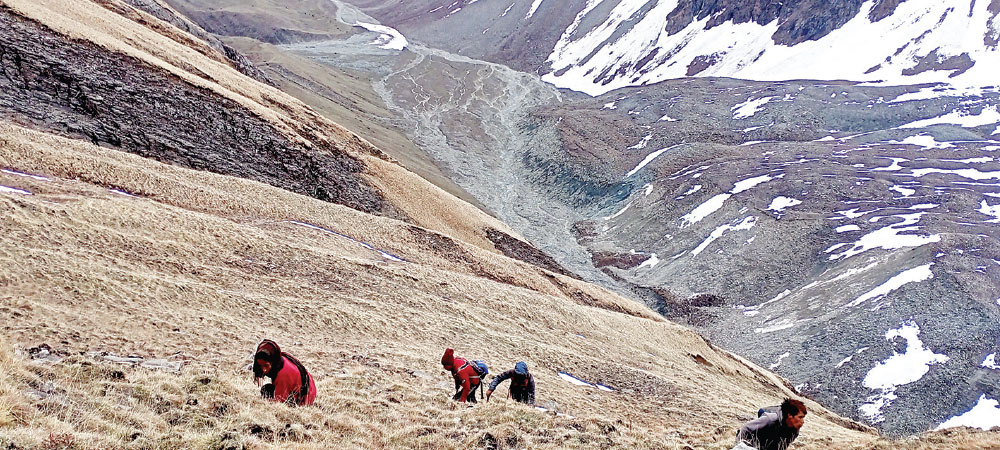
Collectors walk for two days from their homes to reach the high-altitude pastures, carrying tents, bedding, food and other essential supplies. Women and children also make the difficult journey, often putting themselves at risk. Yarsagumba is bought and sold locally for between Rs. 600 and Rs. 800 per piece. Local traders pay between Rs. 1.8 million and Rs. 2 million per kilogram, Lama said.
Yarsagumba is also known as ‘buti’ in some contexts. The fungus is highly valuable in international markets and is often said to be more expensive than gold. This high value encourages people to risk their lives collecting it in difficult and dangerous terrain.
During the yarsagumba season, collectors have to climb to pasturelands thousands of metres above sea level. Villages are often left almost deserted during this period. Schools close, and almost everyone who is physically able heads for the mountains in search of what is locally described as ‘biological gold’.