




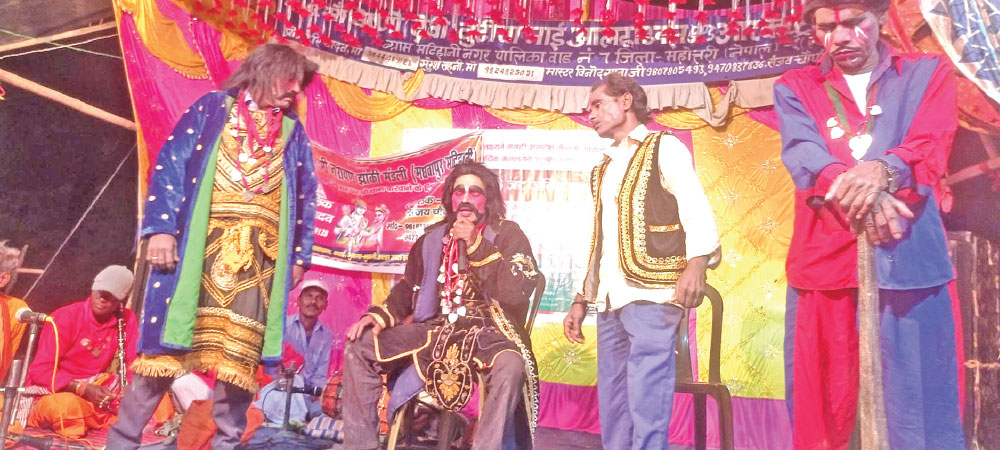
SATV, Kathmandu, July. 24 - Dozens of historic folk dances that embody Mithila’s history, folklore and cultural identity are on the verge of disappearing. As traditions that have been passed down through generations gradually cease to be practised, artists are leaving the profession and traditional dance companies are closing one after another.
As a result, one of Mithila's most valuable cultural heritages is facing an increasingly serious threat.
Folk dances believed to have been performed in the Mithila region since the seventh and eighth centuries AD, including Raja Salhes, Sheet Basant, Runa Jhunna, Badshah, Gopichand, Kunwar Brijman, Sundar Ban Ko Sundar Phool, Allah Rudal, Guglighat, Sama Chakewa and Kamala Maiya, are now rarely seen.
The declining number of performers and the younger generation’s diminishing interest have placed these traditional performances at risk of extinction.
Likewise, other historic folk dances such as Jay Bishahara, Dulha Dayal Singh, Bideshiya, Dinabhadri, Lorik, Rajanal, Raja Harishchandra, Sati Bihula, Karik, Maharai Shokha Mahajan, Maharai Karik Maharaj, Alha Rudal and Jhagdu Mal have largely faded into memory.
These performances once vividly portrayed Mithila's social life, heroic tales, love stories, religious beliefs and folk traditions.
Ramcharitra Mahara, a 45-year-old folk artist from Samsi Rural Municipality-5 in Mahottari, has been involved in traditional folk performances since the age of ten. He said that although he trained around two dozen artists, most left for India in search of employment, causing the group to disband.
“Our troupe used to be invited to villages across the region. Now there are hardly any artists left. Almost everyone I trained has gone abroad for work,” he said.
With the shortage of performers, Mahara was also forced to shut down the dance company he had been operating. He recalled that folk dances, once regularly staged at village fairs, festivals and wedding ceremonies, are now performed only occasionally.
According to Mahara, the widespread availability of recorded performances through digital technology has also weakened the tradition of live performances, undermining the financial sustainability of dance companies.
He said that more than 60 traditional dance companies in Mahottari alone have already ceased operations.
Local resident Dhanbir Mahato said that these folk performances, once immensely popular in rural communities, have steadily declined since Nepal's Maoist conflict. Security concerns, financial hardship and changing social circumstances have all contributed to the gradual contraction of traditional cultural activities.
“Nowadays, these dances are seen only occasionally at weddings. They no longer enjoy the enthusiasm or continuity they once had,” he said. "Without timely conservation efforts, these folk dances could survive only in history books within a few years."
According to cultural experts, Mithila’s folk dances are far more than a source of entertainment. They have played a vital role in passing on local history, folk beliefs, moral values, religious traditions and community life from one generation to the next. Preserving them is therefore inseparable from safeguarding the region's cultural heritage.
Local artists have urged the federal, provincial and local governments to launch comprehensive conservation programmes, provide financial assistance and incentives to performers, allocate regular budgets for training and documentation, and ensure continued opportunities for public performances through local governments.
Stakeholders warn that unless these dances, an enduring symbol of Mithila’s cultural identity, are preserved in time, future generations may know their own unique cultural heritage only through the pages of books.