



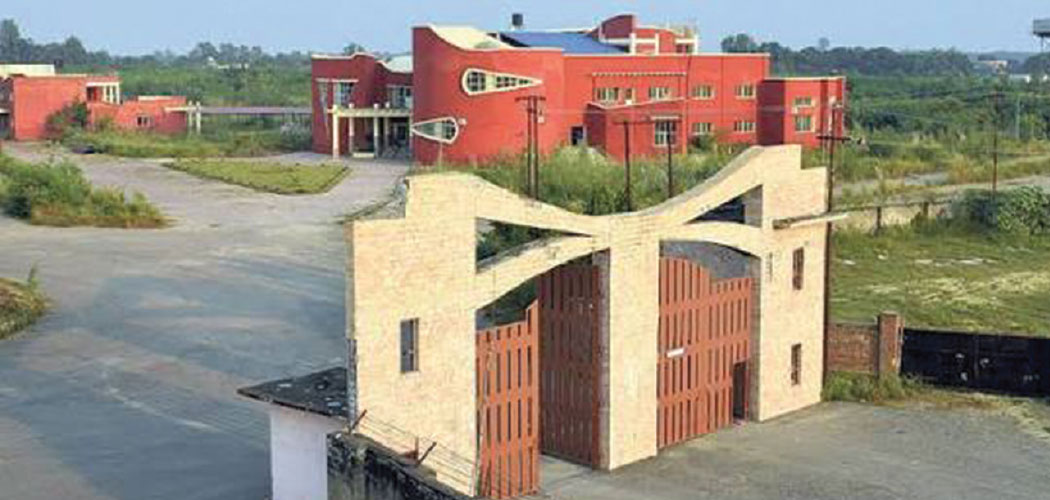
SATV, Kathmandu, Aug. 22 - The Panchakanya Group (PG) has started demolishing a structure it built at a cost of around Rs. 40 million for operating an industry inside the Special Economic Zone (SEZ) in Bhairahawa, Rupandehi, after being unable to sell the structure.
Panchakanya S.S. Export Pvt. Ltd. had sought to sell the structure it built inside the SEZ to another industrialist after it became unable to operate the industry, in an attempt to recover part of its investment. The company said some industrialists had shown interest in purchasing the structure, but it could not be transferred due to legal provisions governing the SEZ.
According to Devendra Sahu, General Manager of the PG, the company expected to receive around Rs. 30 million if it had been allowed to sell the structure in its existing condition. However, selling the structure as scrap after demolition is expected to generate only around Rs. 2 million, resulting in a potential loss of approximately Rs. 38 million.
“We had sought to protect part of our investment by selling the structure that we built with our own investment. But this was not possible because of the legal provisions,” he said. “Ultimately, we have been forced to demolish the structure ourselves.”
The PG had leased four plots inside the SEZ in 2018 to construct the infrastructure required to operate the industry. The facility, built with an investment of around Rs. 40 million, began commercial production in March 2021. With a production capacity of 40 tonnes per day, the industry had also started exporting steel products to India.
However, the industry was hit after exports of steel products to India faced disruptions. The company said the problem was compounded by restrictions on selling goods produced inside the SEZ in the domestic market. As the business came under increasing financial pressure, the company had to cut around 75 per cent of its workforce. It eventually exited the SEZ in September 2025.
Ujjwal Kumar Kasaju, a central member of the Federation of Nepalese Chambers of Commerce and Industry (FNCCI), said provisions such as these in the SEZ regulations had put private-sector investment at risk.
“When an industry shuts down, there should be a provision allowing the infrastructure to be transferred to another investor,” he said.
Ujjwal Kumar Shrestha, Executive Director of the Group, said private-sector participation was essential when formulating laws related to industry and investment.
The Siddharthanagar Chamber of Commerce and Industry and the Tilottama Chamber of Commerce and Industry have also said it was unfortunate that SEZ regulations could result in the destruction of investments worth millions of rupees.
Sabud Dumre, Chief of the SEZ Bhairahawa Office, said the sale of the structure had become difficult because of the legal procedures, and added that the office was providing the necessary facilitation from its side.
The objective of SEZs is to attract industrial investment by promoting exports. However, industrialists say the requirement to demolish privately built structures and sell them at a fraction of their value when industries shut down, because the structures cannot be transferred to other industrialists, has raised questions about the investment environment within SEZs.