




High travel costs, ticket shortages and uncertain road conditions are turning the festive journey into a financial and physical ordeal for ordinary Nepali families.
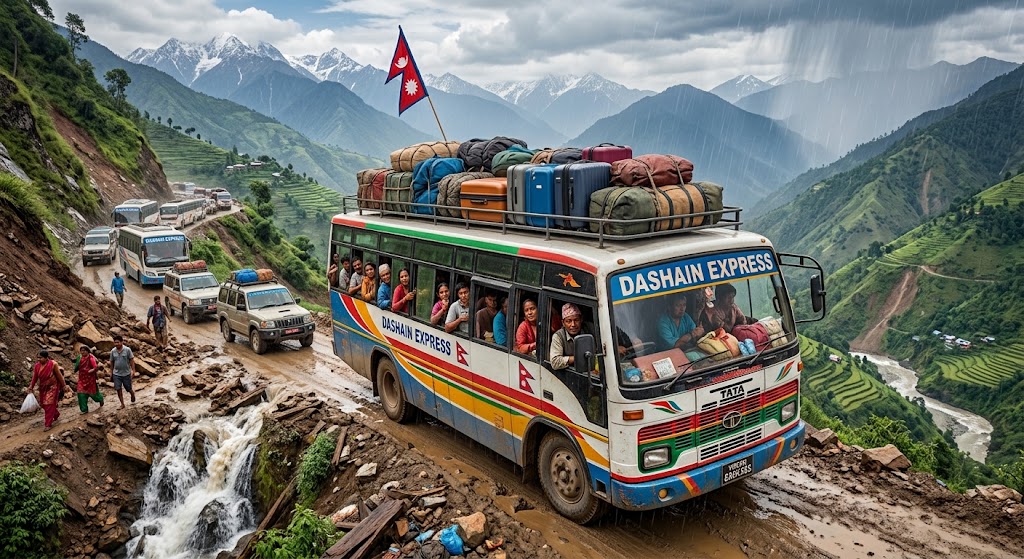
SATV, Kathmandu, October. 15- For many Nepalis, Dashain is a time to reunite with family, reconnect with relatives and take a break from the hardships of everyday life. But this year, the joy of returning home is being overshadowed by rising living costs and increasingly expensive travel.
After working hard throughout the year, many households find that their earnings are already consumed by food, rent, education, healthcare and other essential expenses. With only a limited amount left, families face a difficult choice: should they spend what remains on celebrating Dashain or on travelling home with their loved ones?
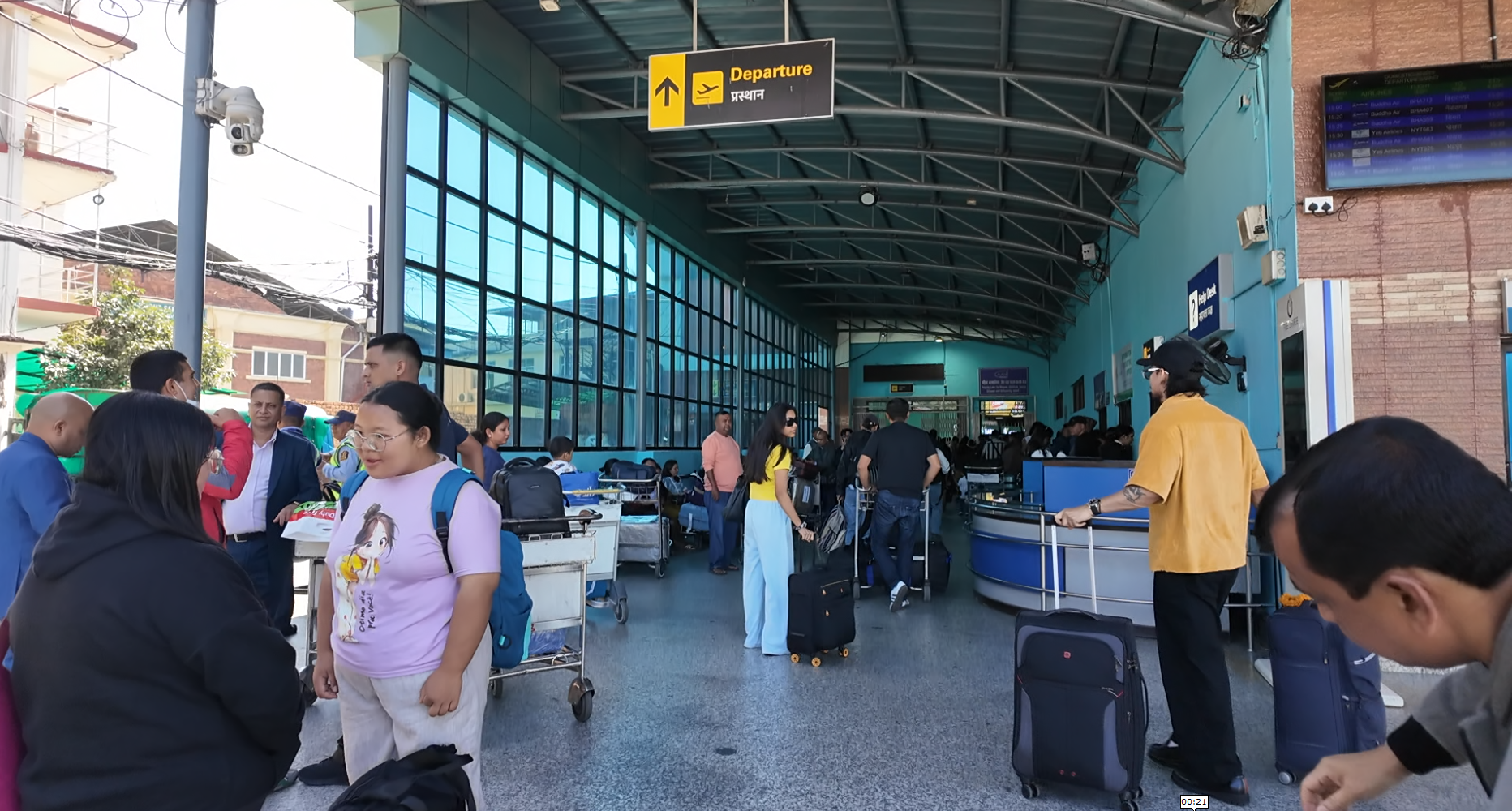
For millions of Nepalis living away from their hometowns for employment, education and business, the journey home has become more stressful than celebratory. Expensive bus fares, soaring airfares, ticket shortages and unpredictable road conditions are adding to the financial and physical burden of the festive season.
How Much Does It Cost a Family of Five to Go Home?
Consider the case of Aravinda Bahadur Singh, who travels between Kathmandu and Dhangadhi in Kailali with his family of five. According to Singh, the round-trip travel expenses for the family alone amount to around Rs 40,000.
For a household earning Rs 50,000 a month, spending Rs 40,000 on bus fares means using 80 percent of its monthly income just to travel home and return.
The remaining Rs 10,000 must cover rent, food, school fees, medical expenses and other necessities. The family must also find money for new clothes, festive meals, gifts for relatives and the traditional practice of giving dakshina, or cash gifts to younger family members.
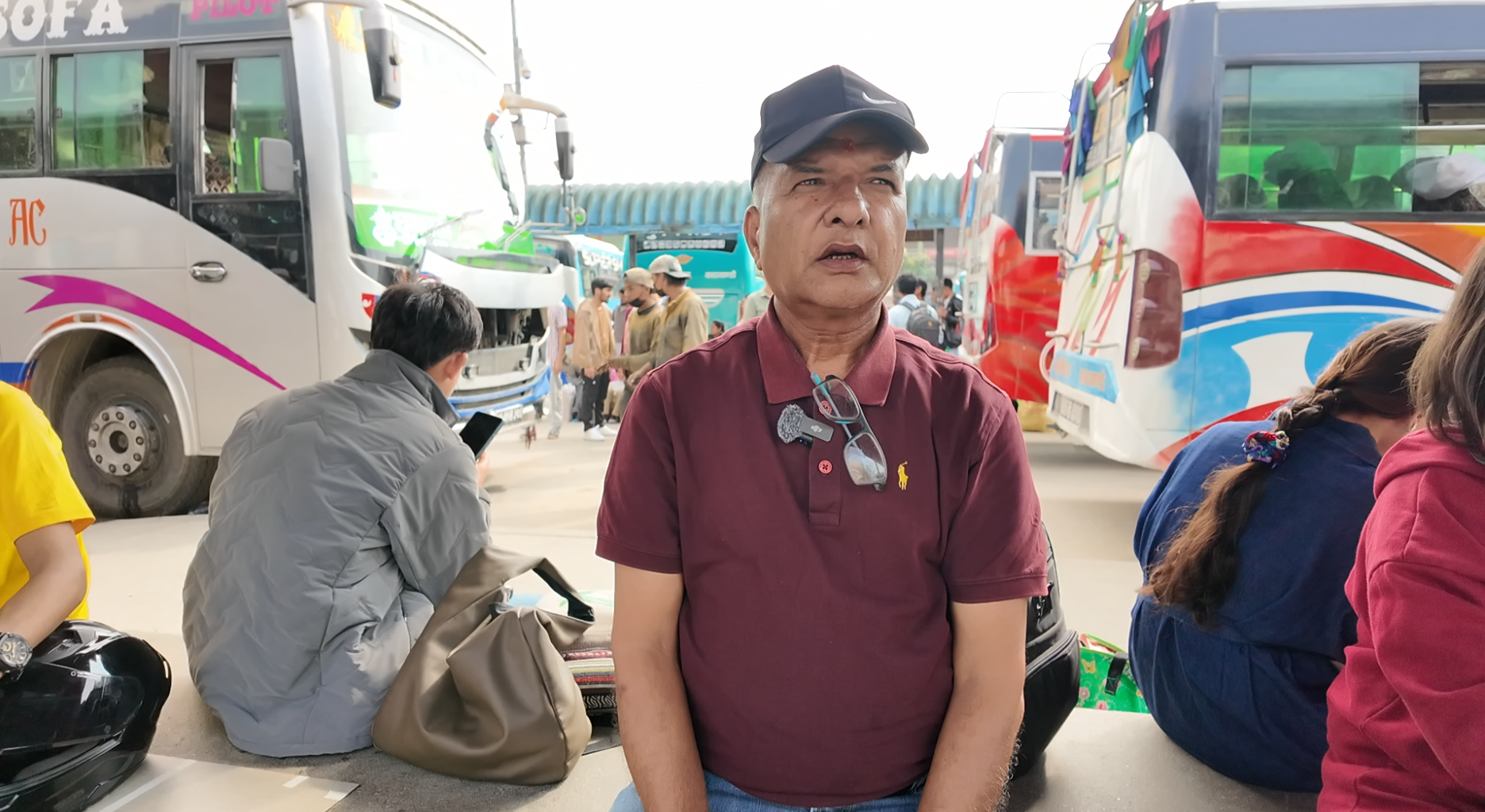
The financial pressure becomes even greater for families that choose air travel to save time or avoid difficult road journeys.
During the festive season, a one-way air ticket from Kathmandu to Dhangadhi has reportedly reached as high as Rs 22,000, compared with around Rs 10,000 under normal circumstances.
At Rs 22,000 per passenger, a family of five would have to pay Rs 110,000 for a one-way journey and Rs 220,000 for a round trip. That is equivalent to more than four months of total income for a household earning Rs 50,000 a month. The calculation does not include transportation to and from the airports.
According to a report published on October 5, 2026, the Kathmandu–Dhangadhi airfare had reached Rs 22,180. The Civil Aviation Authority of Nepal had reportedly set the maximum fare for the route at Rs 21,600. The reported difference raises questions about the enforcement of fare ceilings and the effectiveness of monitoring.
The burden is even heavier for low-income households. The minimum monthly wage for workers in the general sector, effective from fiscal year 2025/26, is Rs 19,550. For a family of five relying on such an income, a one-way bus journey could cost more than an entire month's minimum wage, while the round-trip fare would amount to roughly two months' wages.
These figures represent an illustrative example, not the financial circumstances of every Nepali household. Actual costs vary according to income, destination and mode of transport. Nevertheless, they demonstrate how returning home for a major festival can become a substantial financial challenge.
Reuniting with family is an emotional necessity, but having to spend months of earnings to do so should not be considered an ordinary or manageable burden.
Fuel Costs Are Rising, Fares Are Increasing—but Are Incomes Keeping Pace?
Higher fuel prices, vehicle operating costs, maintenance expenses, driver and assistant wages, and poor road conditions all contribute to the cost of public transportation.
Transport operators say that long-distance journeys require substantial fuel expenditure. Damaged roads increase travel times, while landslides and road blockages can leave vehicles stranded for hours, adding further operating costs.
However, passengers have an equally pressing question: if transport operators can increase fares when their costs rise, how are ordinary consumers supposed to manage when their incomes remain unchanged?
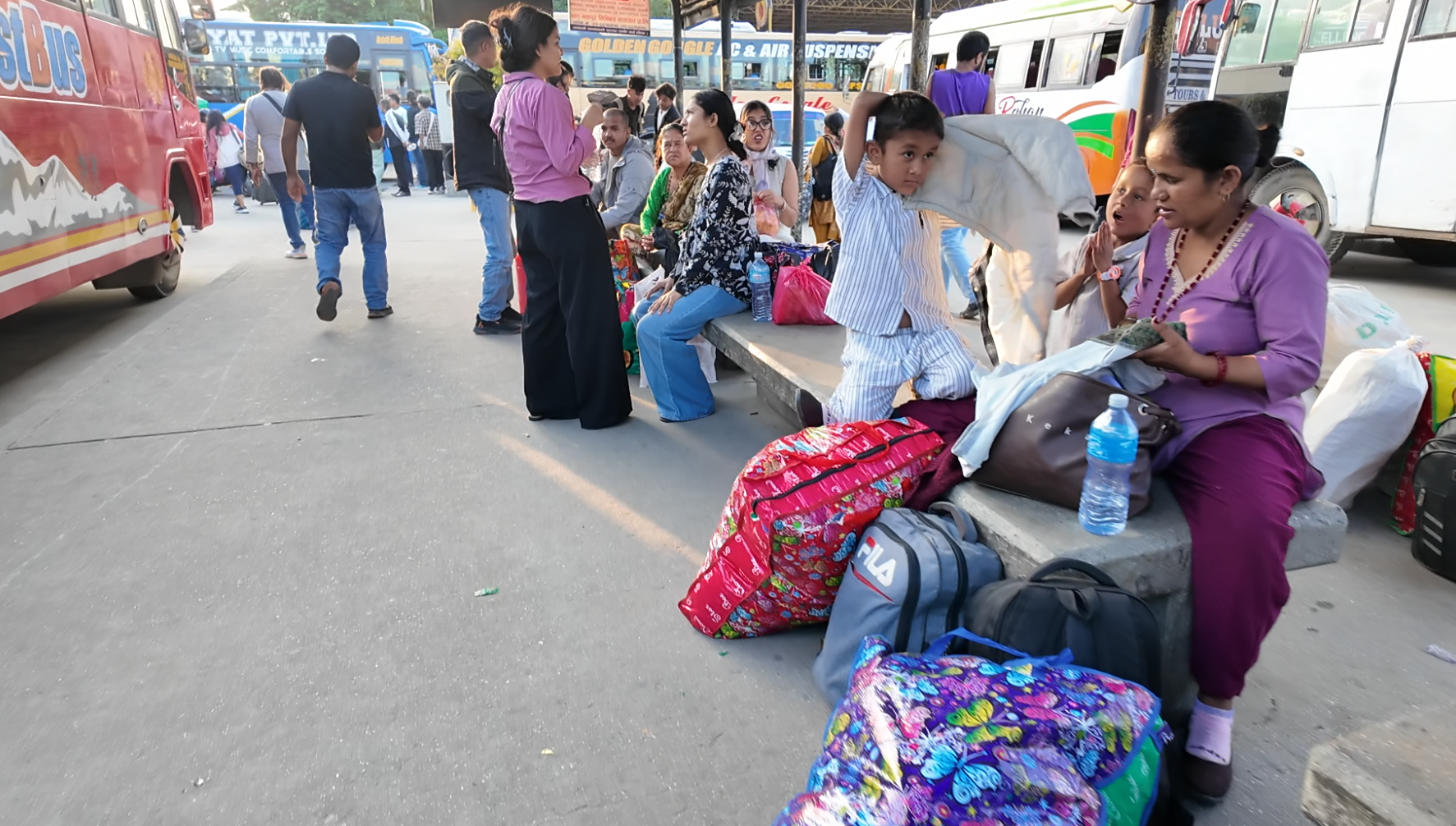
Adjusting fares in response to fuel prices is one aspect of the issue. Transparency in determining the amount of any increase, setting fares for individual routes and ensuring that passengers receive services commensurate with what they pay are equally important.
The authorities responsible for fare regulation must publish clear standards and ensure that passengers have an effective mechanism for reporting overcharging and obtaining redress.
For consumers already struggling with the cost of food, vegetables, cooking oil, clothing and other everyday essentials, travel expenses during Dashain represent another financial burden. The situation is particularly difficult for daily wage earners, households without regular incomes and families that depend on borrowing to meet basic needs.
No Tickets, No Seats: Travellers Struggle to Make It Home
A surge in demand for public transportation during Dashain is expected. Thousands of people living in the Kathmandu Valley and other urban centres seek to return to their permanent homes to celebrate with their families.
However, when available seats fail to meet demand, passengers are forced to search for advance tickets. Some have to change their travel dates because tickets are unavailable, while others are left with little choice but to pay more for whatever alternatives they can find.
The problem is especially serious for employees who have already arranged leave, students returning home after schools close, and people preparing to reunite with relatives after a long separation.
Those who wait until the last minute face fewer options. A lack of available seats can force them to postpone their journeys or choose more expensive alternatives.
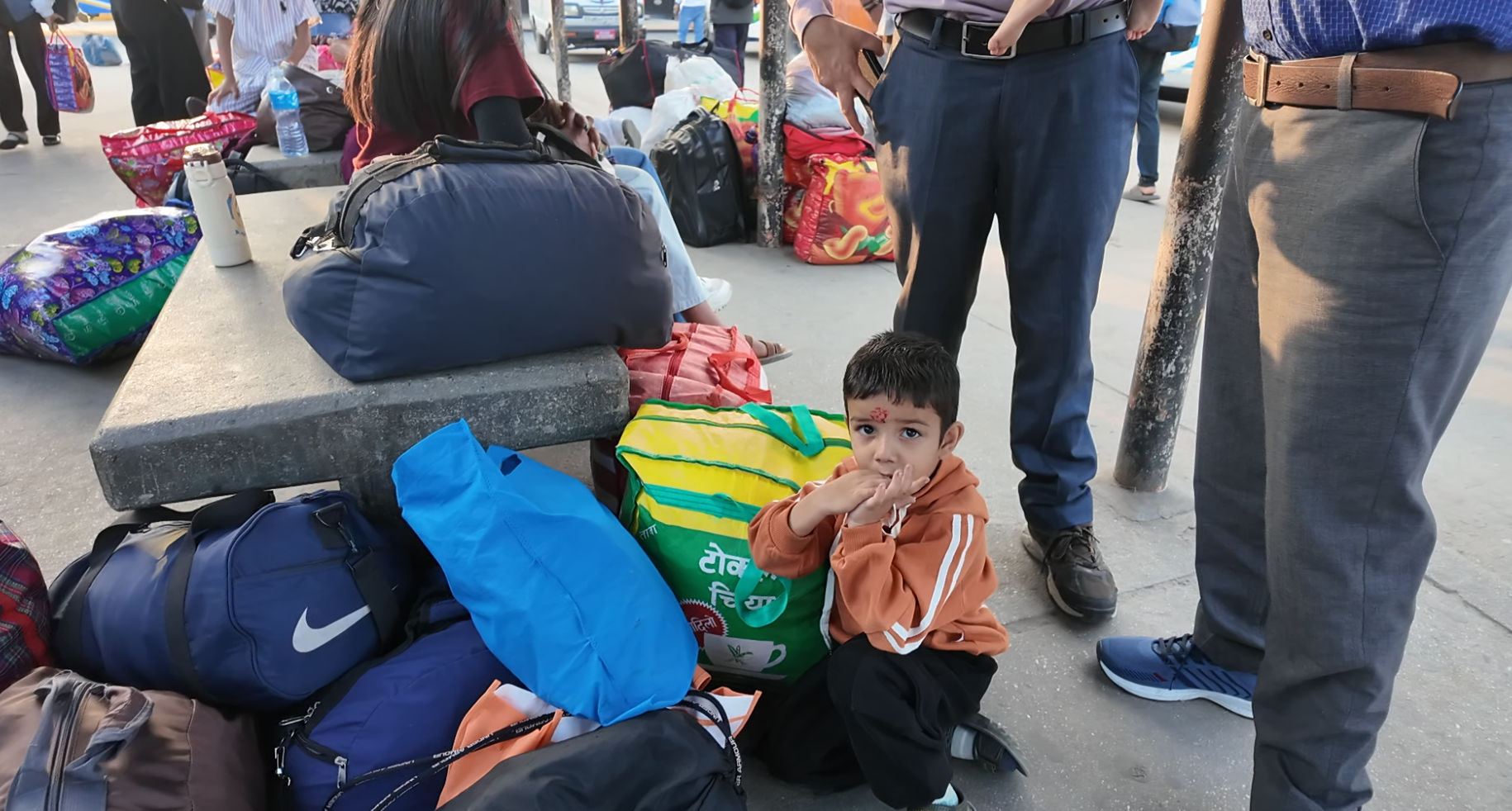
The government could ease the pressure by ensuring advance ticket sales, arranging additional vehicles according to passenger demand, making fares publicly available and strengthening complaint-handling mechanisms.
However, these measures must go beyond official announcements. Monitoring and management must be effective where passengers are actually trying to purchase tickets, with practical solutions available when problems arise.
Dangerous Roads, Uncertain Journeys and the Risk of Accidents
Nepal's public transportation challenges extend far beyond fares and ticket availability. Road conditions remain another major obstacle.
Rainfall during the monsoon, landslides, road subsidence, damaged bridges and ongoing construction work frequently make long-distance journeys unpredictable. These problems become particularly serious during Dashain, when large numbers of people travel at the same time.
Passengers often have little certainty about when a road might be blocked, where a landslide could occur or how long a vehicle might remain stranded.
When roads are obstructed, vehicles may be forced to stop midway, delaying arrivals and creating additional expenses for food, drinking water and other necessities. Such disruptions can be especially difficult for children, senior citizens and people who are ill.
For passengers, boarding a bus means more than simply travelling from one place to another. It also means expecting to reach their destination safely. Poor road conditions, inadequate maintenance and weaknesses in transport management make that expectation difficult to fulfil.
Allocating budgets for road improvements alone is not enough. Construction quality, timely maintenance, identification of high-risk areas, landslide control and alternative routes during blockages are equally essential.
Routes carrying exceptionally high numbers of passengers during major festivals should receive priority in risk assessments. Timely information about actual road conditions and possible disruptions could also help reduce unnecessary hardship.
Transport Operators Face Challenges Too
The difficulties faced by passengers represent only one side of the public transportation problem. Transport operators say that rising operating costs and poor road conditions are also making their businesses increasingly difficult.
Yubaraj Bhattarai, an employee of the National Independent Transport Entrepreneurs Association of Nepal, argues that transport operators can actually incur losses during Dashain because they carry passengers in only one direction.
According to Bhattarai, long-distance journeys involve substantial fuel costs. Landslides and road blockages increase both travel time and operating expenses. After reaching their destination, vehicles may have to return with insufficient passengers or even travel back empty.
In such circumstances, operators say they must cover the costs of both legs of a journey using the fares collected from passengers travelling in one direction.
The important question, therefore, is not simply which side faces greater hardship, but who is responsible for finding a solution.
If passengers and transport operators are both affected by poor roads and weak management, the government must work towards addressing the underlying problems rather than allowing the burden to fall disproportionately on either side.
Government Concern Must Translate into Relief for Ordinary Citizens
Prime Minister Balen Shah has expressed concern about rising prices and the problems faced by ordinary citizens. However, questions remain about whether people are experiencing tangible relief in their daily lives.
Government attention, directives and monitoring efforts may be positive steps. But for ordinary citizens, the effectiveness of a government is measured not by speeches or announcements, but by the changes they experience in everyday life.
Can passengers travelling home for Dashain obtain tickets at reasonable prices? Can authorities prevent overcharging? Can vehicles travel safely on the roads? Are alternative arrangements available when routes are blocked? Are maximum airfare limits being enforced?
The answers to these questions will reveal how effectively the government is managing the situation.
The government may point to the infrastructure, technology and transportation systems of developed countries. It may highlight plans for modern cities, faster transport and better roads. But if ordinary citizens cannot easily obtain a bus ticket to return home within their own country, how can they experience the benefits of development?
Development cannot be measured solely through large infrastructure projects or ambitious plans. It must also be reflected in affordable and safe transportation, fewer hours spent stranded on roads, accessible public services and the ability of people to meet their basic needs within the limits of their income.
The Worry Is Not Just Getting Home, but Returning on Time
For those who manage to arrange the money and reach home for Dashain, the journey does not end there. They must also return to work after the celebrations.
If securing a ticket to travel home is difficult, finding one for the return journey can be equally challenging. Some passengers may obtain tickets for their outward journey without having any certainty about when they can return.
Employees in the private sector often cannot take extended leave. Daily wage earners risk losing income if they fail to return to work on time. Students must consider when schools and colleges reopen. People preparing to travel abroad or reach another destination by a fixed date also face difficulties when roads and transport schedules remain uncertain.
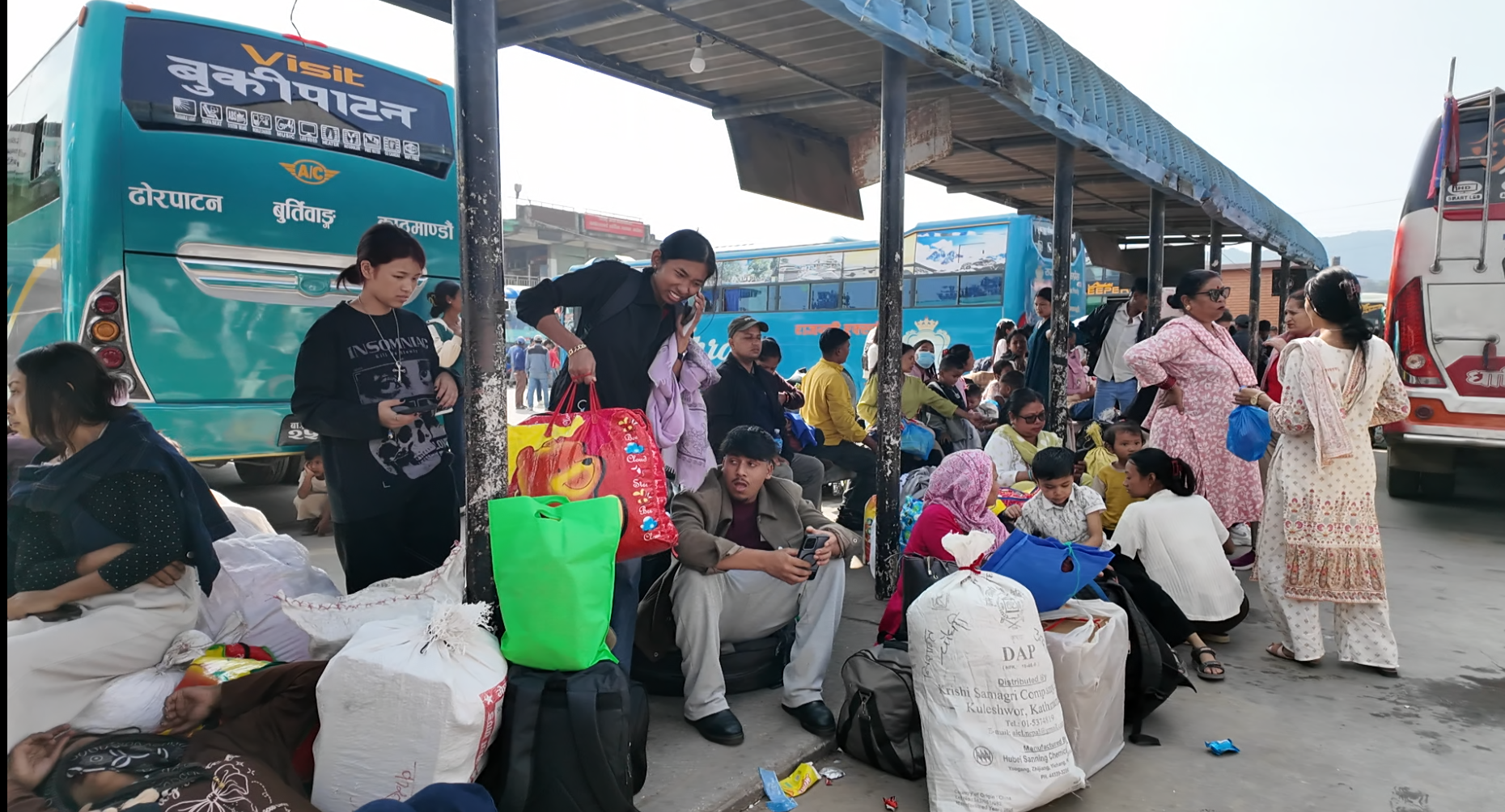
Festive transport planning, therefore, must not focus exclusively on the day people leave for home. Authorities must also account for return journeys, ticket availability, vehicle supply and road conditions.
Policymakers should also consider how to address the difficulties transport operators face when vehicles carry large numbers of passengers in one direction but return with few or no passengers.
A Festival of Reunion Should Not Become a Financial Burden
For millions of Nepalis, returning home for Dashain is an opportunity they look forward to throughout the year. But when a substantial share of a family's income must be spent on travel alone, the financial pressure can overshadow the joy of the festival.
High bus fares, expensive air travel, ticket shortages and unsafe or unreliable roads are leaving ordinary citizens with increasingly limited options.
The difficulties faced by transport operators are also real. They must contend with fuel costs, maintenance expenses and the financial consequences of operating on poorly maintained roads. Yet ensuring that passengers receive safe, reasonably priced services and that operators comply with established rules are not conflicting objectives.
Transparent fare-setting mechanisms, better-quality roads, effective regulation and practical transport management can help both sides.
As the government pursues its goals of development and prosperity, it must prioritise solutions to the problems citizens encounter in their everyday lives.
A state that promises modern transportation must first ensure that its citizens can travel safely, conveniently and affordably—especially at a time when returning home to be with family matters most.