




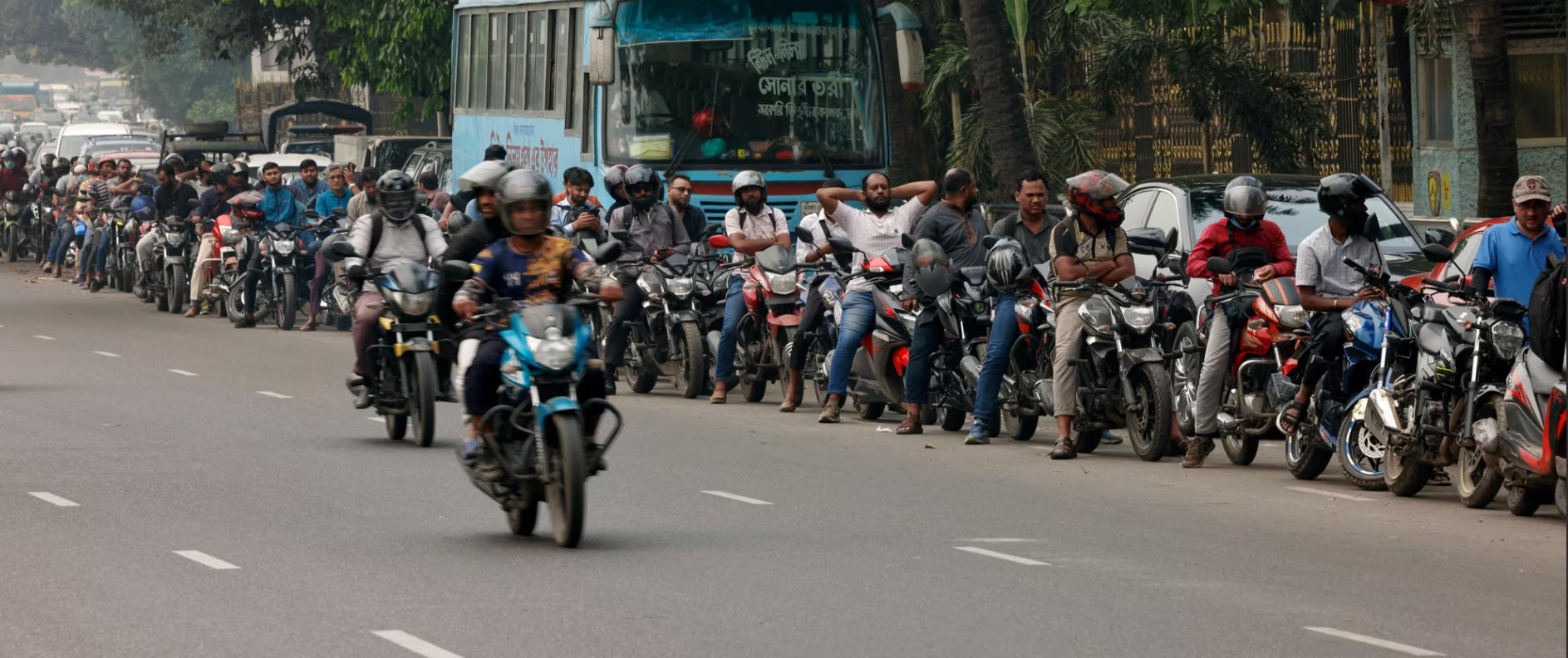
SATV, Kathmandu, Mar. 15 - Every day, Shakil Khan weaves his bike through the relentless traffic of Dhaka, delivering items and ferrying passengers across the city. However, these days he’s waiting hours in long queues at gas pumps to fill his bike within a government cap on fuel purchases.
Khan is one of tens of millions of people in Bangladesh suffering oil and gas shortages as the joint US-Israeli military offensive against Iran hits fuel supplies worldwide.
“Because of the oil shortage, my daily income is reduced,” said Khan, as a queue of motorcyclists stretched out behind him, snaking around the block in the Bangladeshi capital.
Thousands of miles away, one of the world’s most critical energy arteries – the Strait of Hormuz – has also come to a virtual standstill as missiles and drones crisscross the Persian Gulf and Iran steps up its attacks on ships.
Like many countries across Asia, Bangladesh relies on foreign oil and gas imports – and suggestions that supplies may run low have prompted new policies from governments across the region.
As the world’s wealthiest nation leads a costly war – one think tank estimated the US is burning through $890 million a day – those who are least able to afford it are feeling the most acute and immediate impact on their wallets.
Millions of people are being told to turn down air conditioning, switch off lights, avoid travel for meetings, and perhaps even work from home to save energy.
In a historic move on Wednesday, member countries of the International Energy Agency unanimously agreed to release 400 million barrels of oil – the largest release of emergency stockpiles ever recorded.
The United Nations has warned of catastrophic consequences if the disruption drags on.
“The resulting ripple effects go far beyond the region, affecting energy markets, maritime transport and global supply chains,” it said in a report on Tuesday.