




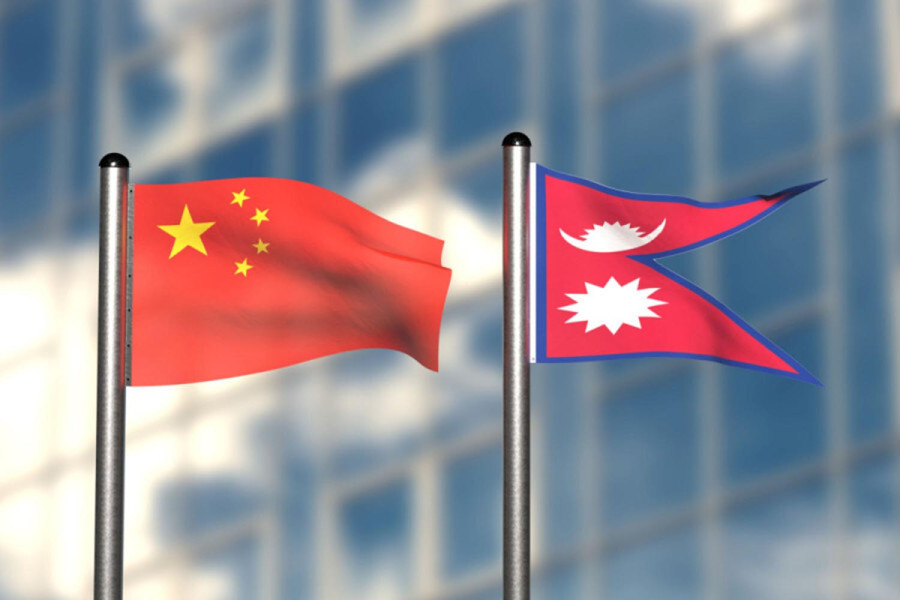
SATV, Kathmandu, May. 13 - The bilateral engagement between Nepal and China is gaining momentum with both sides planning to expedite exchange of visits at various levels in the coming months.
Officials familiar with the developments say preparations are going on to convene the third meeting of the Mechanism for Facilitation on the Implementation of Nepal-China Cooperation Programmes and Projects in Kathmandu in the first week of June.
The meeting has been proposed for June 2, foreign ministry spokesperson Lok Bahadur Poudel Chettri told the Post, to discuss the status of various China-funded projects in Nepal.
The meeting will review the progress of ongoing Nepal-China economic and development cooperation programmes and projects, and identify measures to expedite their timely and effective implementation, as per the meeting's mandate.
Foreign Secretary Amrit Bahadur Rai and Chinese Ambassador to Nepal Zhang Maoming will lead their respective delegations at the meeting, where they will review the status of China-funded projects in Nepal and identify any bottlenecks.
The Ministry of Foreign Affairs has already sought details and the status of China-funded projects and held meetings with joint secretaries from across the line ministries to update them on progress.
Officials from several ministries say the Chinese side seems serious in tracing the bottlenecks in projects with its involvement and resolving them. They believe bilateral engagements will yield some positive results.
Chinese assistance to Nepal falls into three categories: grants (aid gratis), interest-free loans, and concessional loans. Its financial and technical assistance is largely focused on infrastructure development, industrialisation, human resource development, health, education, water resources, and sports.
Syaphrubesi-Rasuwagadi Highway Repair and Improvement Project; Chilime-Rasuwagadhi-Kerung 220 KV transmission line project; Nepal-China Cross-border Railway (Jilong-Kathmandu) Project, and Kathmandu Ring Road Improvement Project (Phase II ), whose memorandum of understanding was signed two weeks ago, are the major projects under the Chinese assistance. The Bir Hospital Extension Project in Duwakot, Tokha-Chhahare, and Mailung-Syabrubesi Tunnel; Hilsa Bridge over the Xiarwa River; Damak Industrial Park; and the Narayanghat-Butwal Road Improvement Project are also on the list, according to the ministry.
Other sets of projects, as identified and listed under the Belt and Road Initiative, are also making very dismal progress, a senior finance ministry official said.
Ten projects were agreed to be financed under the BRI between Nepal and China in December 2024, during Prime Minister KP Sharma Oli's official visit to China, when the BRI framework agreement was signed.
“With the signing of the Memorandum of Understanding on Cooperation under the Belt and Road Initiative on 12 May 2017 in Kathmandu, and the signing of the Framework for Belt and Road Cooperation on 04 December 2024 in Beijing, between Nepal and China, new avenues for bilateral cooperation in the mutually agreed areas are expected to open. The major thrust of the cooperation under the BRI is to promote mutually beneficial cooperation between Nepal and China in various fields such as economy, environment, technology and culture,” according to the foreign ministry.
After the meeting between the foreign secretary and the Chinese ambassador at the level, both sides are also planning to hold the meeting of the Nepal-China joint consultation mechanism, which is led by the foreign secretary of Nepal and a vice minister of the Ministry of Foreign Affairs of China. This time the meeting will be held in China, but no concrete dates have been agreed so far, a foreign ministry official told the Post.
Ahead of the Gen Z movement in September last year, the two sides had only reached the stage of sharing the “concept paper” on individual projects that had been agreed to be expedited under the BRI framework.
As per Nepal’s proposal, 10 different projects under the BRI were agreed upon for execution. But even the pre-feasibility studies for most of these projects have yet to begin and remain incomplete.
The 10 projects were Tokha-Chhahare tunnel road; Hilsa-Simkot road project; Kimathanka-Khandbari road and bridge; Jilong-Kerung-Kathmandu cross-border railway; Amargadhi City Hall in Dadeldhura; Jilong-Kerung-Rasuwagadhi-Chilime 220KV transmission line; Madan Bhandari University; Kathmandu Scientific Centre and Science Museum; China-Nepal Friendship Industrial Park in Damak; and the Jhapa Sports and Athletics Complex.
China has completed the feasibility study for the Jilong-Kerung-Kathmandu cross-border railway and will hand over the report to the Nepali side by the end of June.
The two sides have also exchanged letters to expedite the construction of the Tokha-Chhahare tunnel road and the Hilsa-Simkot road project.
Officials indicated that all China-funded projects, whether identified as a part of the BRI or not, will be discussed in both meetings that will be convened in the first week of June and later in China.
Nepal and China have also exchanged a letter to construct the 96-kilometre Hilsa-Simkot road as a part of the Karnali Corridor. Kathmandu has also requested that Beijing build a motorable bridge at the Nepal-China border. Officials from both the finance and foreign ministries said that they now await China’s call to conduct a pre-feasibility study of these projects.
With the status of those projects under review, each ministry implementing them has forwarded them to the foreign ministry.
The concept notes for the construction of the Kimathanka-Khandbari road and bridges, the Amargadhi City Hall in Dadeldhura, the Jilong-Kerung-Rasuwagadhi-Chilime 220KV transmission line, the Kathmandu Scientific Centre and Science Museum, the China-Nepal Friendship Industrial Park in Damak, and the Jhapa Sports and Athletics Complex are under the Chinese side’s consideration.
Officials from various ministries who spoke to the Post said that some projects are at the breakthrough stage, while others need additional homework to conduct the final feasibility study.
“There have been positive talks on reaching an early deal on the transmission line to be built with a Chinese grant,” said an official at the ministry. The Chinese side had agreed to conduct a repeat study of the proposed transmission line so that it could be developed to their standard.
In addition to these three ready-to-go projects, the concept papers outlining various aspects of developing other projects have been shared with the Chinese side for consideration.
If approved, a pre-feasibility study will follow, to be discussed in an upcoming meeting in Kathmandu and, next, in Beijing very soon.
Kathmandu and Beijing are also planning to hold another meeting at the foreign secretary and China’s Vice Foreign Minister level in China, expected to take place in June.
Deputy Director General at the Department of Asian Affairs at China’s Ministry of Foreign Affairs, Cao Jing, during her meeting with Foreign Secretary Rai last month, had proposed to hold the 17th meeting of the Nepal-China joint consultation mechanism in China. However, dates have not been finalised yet, said the foreign ministry official.
Zho Pen, vice chairman of the Xizang Autonomous Region (formerly known as Tibet), who is a vice-minister-level Chinese official, is arriving in Kathmandu on May 25. The delegation has sought a meeting with Foreign Minister Shisir Khanal and Minister for General Administration Pratibha Rawal, among others.