



The government has initiated a process to remove Upper Mustang from the restricted-area category, a status it has retained for more than three decades.
The process gained momentum after the Department of Immigration wrote to the District Administration Office (DAO), Mustang, asking it to review the existing restrictions and submit recommendations with supporting reasons and justification.
Elected representatives from federal, provincial and local levels in Mustang have been pressing the government for the past decade to lift the restrictions, arguing that the provision has seriously hampered tourism development and economic activities in the region.
On September 28, the Department of Immigration sent a letter to the DAO, requesting it to coordinate with local governments and concerned offices and submit recommendations within seven days on whether the restricted-area status should be reviewed, along with the grounds, reasons and justification.
Following receipt of the letter, the DAO wrote to Lo-Ghekar Damodarkunda and Lomanthang rural municipalities on the eve of the Tihar holidays.
Lo-Ghekar Damodarkunda Rural Municipality has decided to recommend removing all five wards within its jurisdiction from the restricted-area list, according to its chairperson, Lopsang Chhomphel Bista.
A meeting of the rural municipal executive committee chaired by Bista on November 6 decided to recommend that the entire areas of wards 1 to 5 be removed from the restricted-area category.
Assistant Chief District Officer Ek Narayan Bhandari said the DAO would forward the recommendations and views of the local governments to the Department of Immigration by next week.
"We have already sought suggestions from the concerned rural municipalities. As there have been consecutive public holidays, they have informed us that they will send their decisions immediately after the holidays," he said.
Local representatives believe that the restricted-area provision has become an obstacle to tourism and trade, particularly after the permanent operation of the Korala border point with China increased prospects for cross-border commerce.
An immigration office was also established at the border point a year ago to facilitate tourists visiting the sacred pilgrimage site of Kailash Mansarovar in Tibet through Korala. The pilgrimage site attracts Hindus, Buddhists, Jains and followers of other faiths.
Lomanthang Rural Municipality Chairperson Tashi Norbu Gurung said the existing restrictions had also created serious difficulties in evacuating patients suffering from critical health conditions during emergencies, as special permissions and complicated procedures were required.
"We are encouraged by the Department's letter, which has raised new hopes for tourism in Upper Mustang. This is the beginning of success after years of sustained efforts," Gurung said. He compared the impact of the restrictions on tourism in Upper Mustang to keeping the region inside a zoo, arguing that the existing provisions had prevented visitors from freely exploring its attractions.
Chhusang in Ward No. 3 of Baragung Muktichhetra Rural Municipality and the Sangta area in Ward No. 5, bordering Dolpa, are also included in the restricted-area list.
Only around 4,000 tourists visit the major tourist destinations in Lomanthang and Lo-Ghekar Damodarkunda rural municipalities annually.
At present, foreign tourists visiting Upper Mustang must obtain a special trekking permit from the Department of Immigration, in addition to an entry permit from the Annapurna Conservation Area Project (ACAP). The special permit costs US$50 per person per day.
Mustang's House of Representatives member Yogesh Gauchan Thakali said the restricted-area provision had obstructed tourism development in the district.
Although more than 120,000 foreign tourists visit Mustang annually, only a small number travel to Upper Mustang, mainly because of the expensive permit fees and cumbersome procedures, he said.
Thakali said Upper Mustang could serve as a shorter and more convenient route to Kailash Mansarovar in Tibet, an autonomous region of China.
He said linking Lomanthang with Kailash Mansarovar through Nechung, particularly for Indian Hindu pilgrims visiting Muktinath, could open up new opportunities for tourism.
However, the existing permit requirements and fees have made it difficult to tap this potential. Removing the restrictions would therefore mark a milestone in the development of the tourism sector, he added.
Under the Immigration Rules, 1994, 15 border areas across 13 northern Himalayan districts, including Mustang, have been designated as restricted areas where foreign nationals can enter only after obtaining special trekking permits.
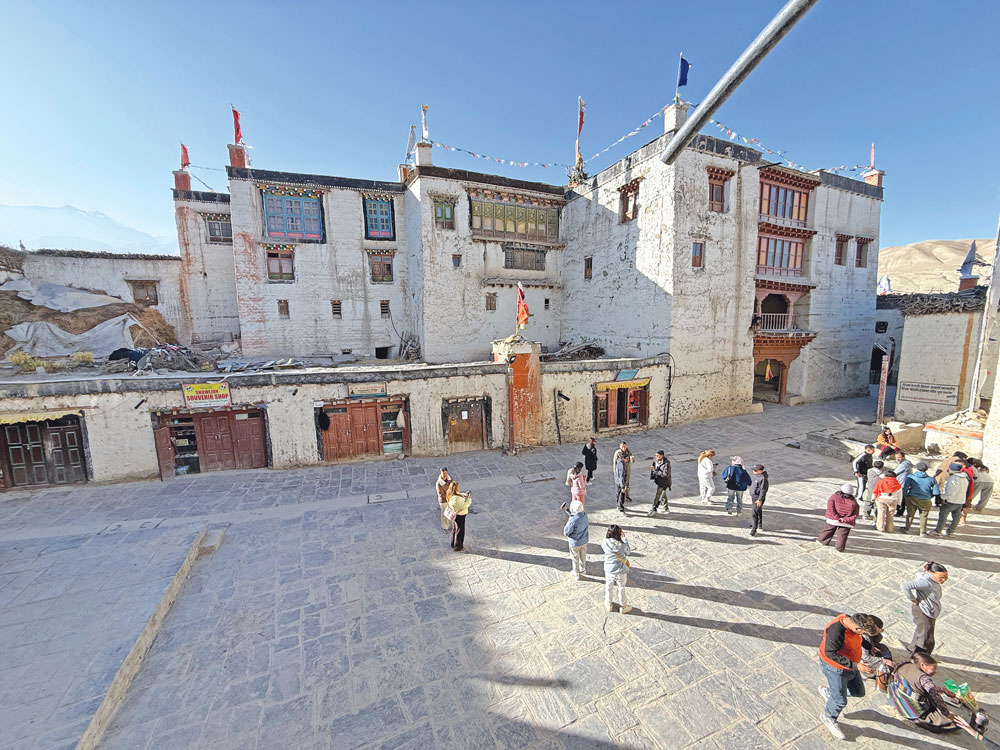
Foreign tourists visiting Upper Mustang generally spend more time exploring its ancient human settlements, caves, monasteries, Lomanthang Palace, traditional mud-brick settlements, and distinctive local culture, customs and lifestyles than visiting the Korala border area.
The government of Nepal opened Upper Mustang to foreign tourists in 1992. Foreign visitors generally travel to Mustang by trekking routes and road networks during the spring and autumn seasons, the district's two major tourist seasons.