




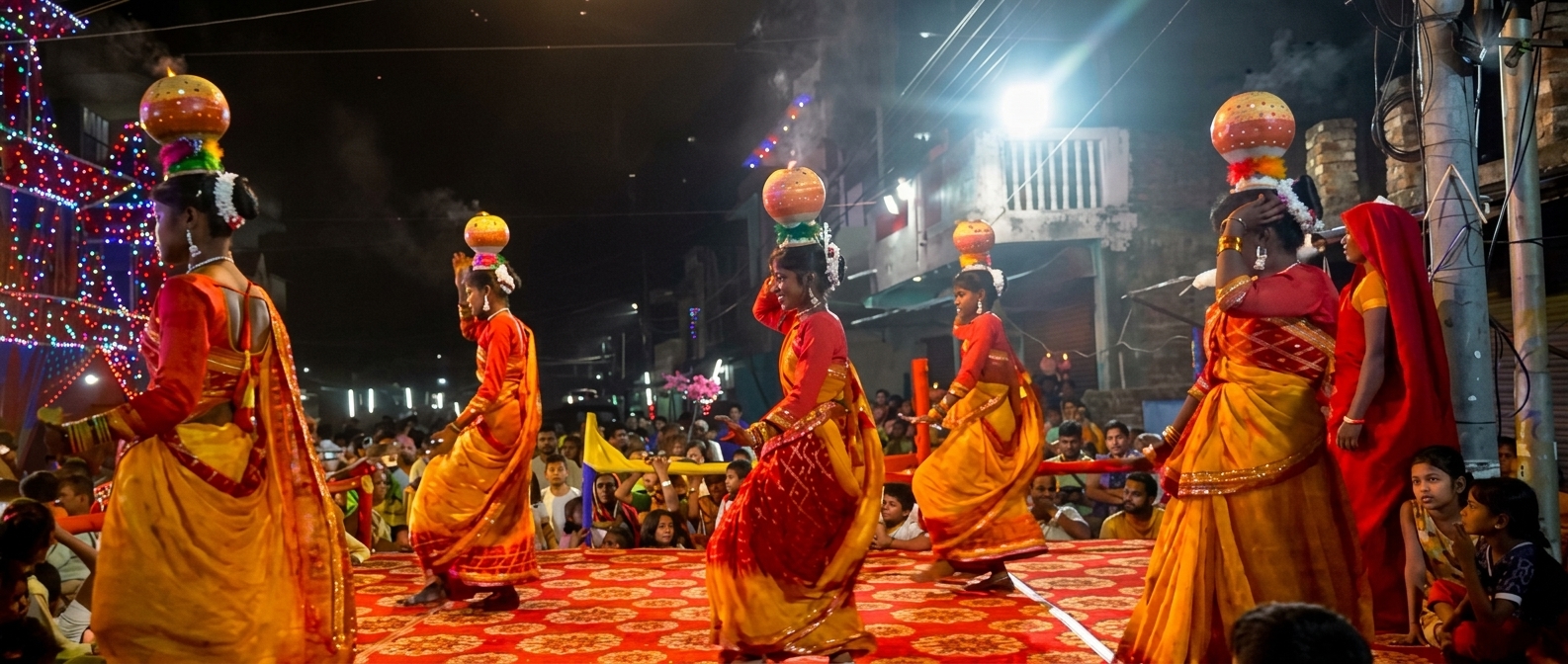
SATV, Kathmandu, October 15. The Jhijhiya dance, widely recognized as a symbol of Mithila’s religious faith, folk beliefs, and cultural identity, begins appearing in villages and settlements across the Mithilanchal region with the arrival of Dashain. In this traditional dance, performers place earthen pots pierced with holes on their heads and light lamps inside them as they dance together. The tradition has become an integral part of Mithila’s distinctive folk culture and holds particular significance in the districts of Madhesh Province.
Jhijhiya is more than a form of entertainment. It is a religious and cultural tradition associated with devotion to Goddess Durga and prayers for the protection of children and families, as well as peace and prosperity in the community. Practiced across the Mithila region of Nepal and India, the dance plays an important role in keeping the Maithili language, folk songs, and cultural heritage passed down through generations alive.
Although various stories surround the origins of Jhijhiya, clear historical records documenting its beginnings are not available. Nevertheless, based on local oral traditions, folk tales, and religious beliefs, it is widely regarded as an ancient folk tradition of Mithila.
The dance is performed particularly during Sharadiya Navaratri, when devotees worship Goddess Bhagwati and pray for protection against evil forces and misfortune. One of the most popular legends associated with the tradition concerns King Balaruchi.
According to Pandit Vivek Pandey, a renowned religious scholar from Dhanusha, Jhijhiya is linked to traditional rituals performed to protect children from supposedly evil forces. A popular belief associated with the dance holds that evil spirits attempting to count the holes in the earthen pot could harm the female performer.
The songs performed during Jhijhiya celebrate the glory of the goddess and express wishes for family well-being, children's safety, and the happiness and prosperity of the village. Sung in the Maithili language, these songs also contribute to preserving the region's linguistic identity and oral literary traditions.
In recent years, Jhijhiya has expanded beyond village courtyards and household gatherings to schools, cultural festivals, public events, and organized performances on various stages. While this wider exposure has helped introduce Mithila’s folk culture to larger audiences, challenges remain in preserving traditional songs, original musical rhythms, and authentic dance styles.
Himanshu Chaudhary, a cultural researcher from Dhanusha, emphasizes the need for cooperation among local governments, cultural organizations, schools, and communities to preserve the Jhijhiya tradition. He believes that documenting traditional folk songs and stories, training younger generations, recognizing artists, and ensuring regular performances at cultural events would help safeguard the tradition for the long term.
As a cultural symbol of Mithila, Jhijhiya should be preserved not merely as an entertaining performance associated with Dashain, but as an important part of the region’s cultural heritage, deeply connected to religious faith, women's participation, the Maithili language, and historical folk memory.
By promoting the tradition in ways that suit modern times while maintaining its original character, Jhijhiya can continue to thrive as a proud symbol of Mithila’s cultural identity for generations to come.