




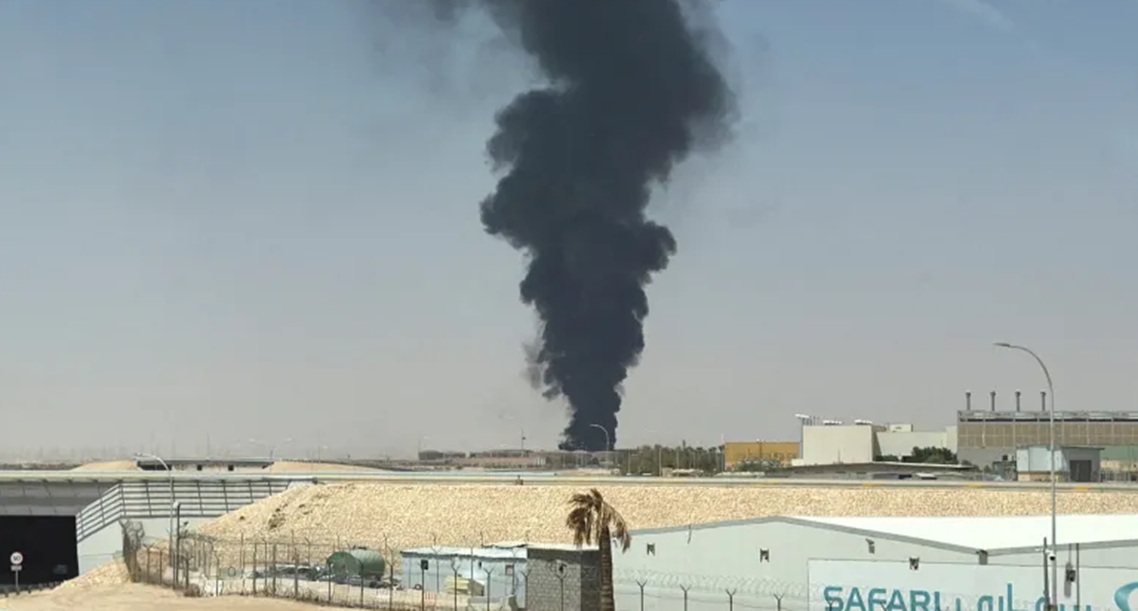
SATV, Kathmandu, October 11- At least 12 people have been killed and 309 injured in an attack at an airport in Riyadh, the capital of Saudi Arabia. The incident has raised questions about the country’s air defence capabilities, despite its extensive military cooperation with the United States and substantial stockpiles of advanced weaponry.
A Saudi-led military coalition also reported that a missile landed near King Fahd International Airport in Dammam, eastern Saudi Arabia, on Saturday.
The coalition blamed Yemen’s Houthi rebels for the attack in Riyadh, describing it as a “war crime” and warning that retaliatory action could follow.
Reports in recent weeks indicate that Houthi rebels have been targeting Saudi airports and other critical infrastructure. The group had also claimed responsibility for similar attacks in the days leading up to the latest incident.
Saudi Arabia is a major military partner of the United States and has invested heavily in fighter jets, missile defence systems and other advanced military equipment. However, the latest incident has highlighted the challenges of preventing every attack, even with substantial military resources.
The Houthis have increasingly challenged Saudi Arabia’s security systems through the use of relatively inexpensive drones and missiles. Countering such weapons can require the deployment of costly interceptor missiles, creating a significant financial and operational burden.
Simultaneous attacks from multiple directions can also place additional pressure on systems responsible for detecting, tracking and intercepting incoming threats.
As a result, Saudi Arabia’s challenge extends beyond the size of its military arsenal. It must also adapt its air defence capabilities to evolving warfare tactics and the growing use of relatively low-cost weapons.
According to an analysis by US-based broadcaster CNN, the growing influence of Iran-backed Houthi rebels in Yemen and their attacks on Saudi Arabia have left Riyadh facing difficult choices over its potential response.
Mohammed al-Basha, a Yemen expert and risk consultant based in Washington, told CNN that the possibility of a large-scale Saudi retaliatory operation was increasing.
With inputs from international media.