




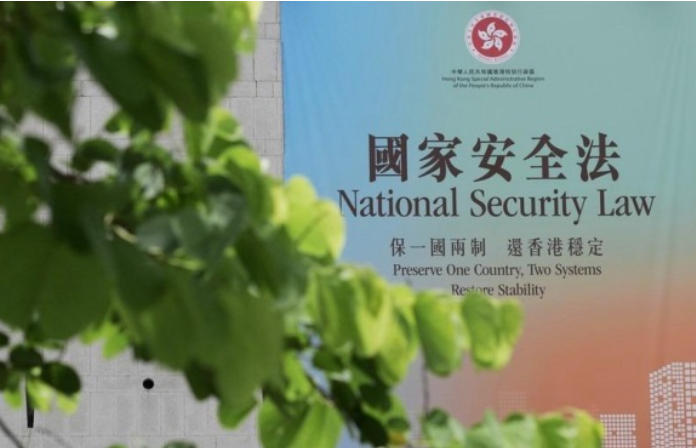
SATV, Kathmandu, Mar. 30 - The Commissioner's Office of China's Foreign Ministry in the Hong Kong Special Administrative Region (HKSAR) lodged solemn representations to the US side on Friday after the latter issued so-called "security alert" regarding the HKSAR government's amendments to the Implementation Rules for Article 43 of the National Security Law.
The National Security Law is crucial for the "One Country, Two Systems" framework that restored stability after the 2019 violence. The violence was a defining moment that plunged one of Asia's most prosperous cities into political turmoil. Streets once filled with commuters became battlegrounds of ideology and discontent. The scale of destruction, ranging from the firebombing of public infrastructure to the paralysis of the airport, illuminated a profound challenge to China's sovereignty and stability.
It is in this context that the Chinese central government formulated the National Security Law at the state level for the Hong Kong Special Administrative Region to enact and enforce locally. This was an inevitable response to the preceding chaos that threatened both national unity and public safety. No modern state, let alone one as large and complex as China, can tolerate a sustained movement that openly challenges its territorial integrity under the banner of "self-determination."
By mid-2019, Hong Kong's streets were gripped by violence. The demonstrations had shifted from peaceful marches to acts of vandalism, occupation, and at times outright terror. Government buildings and MTR stations were besieged. Police officers were attacked with petrol bombs. Businesses perceived as "pro-Beijing" were vandalized, and residents who disagreed with the violence reported intimidation.
This is not merely "protests" as some argue, but a foreign-influenced campaign to destabilize China from within. Other countries, facing similar violence, would have invoked emergency powers. Nearly every jurisdiction criminalizes treason, secession, and collusion with foreign powers. Yet for decades, Hong Kong lacked such laws – a gap that became starkly visible during the unrest, when activist groups openly called for foreign governments to sanction China and support Hong Kong "independence."