



Satv, Kathmandu, Nov. 26: Nepal has launched a US$ 49.94 million project to reduce glacial lake outburst flood (GLOF) risks and protect vulnerable mountain communities.
The project plans to lower water levels in four high-risk glacial lakes and strengthen early warning systems. Running until 2033, it aims to directly benefit more than 385,000 people and improve the safety of nearly two million others living in downstream areas.
The government, in collaboration with the United Nations Development Programme (UNDP), organised the national inception workshop on Wednesday in Kathmandu for the GLOF Sanjibani Project. The project is designed to protect climate-vulnerable Himalayan communities from catastrophic GLOFs.
The US$ 49.94 million project is financed through a US$ 36.16 million grant from the Green Climate Fund, alongside US$ 11.32 million in co-financing from the Government of Nepal, US$ 2.14 million from UNDP and US$ 0.32 million from private-sector partners.
Scheduled to run from 2026 to 2033, the project aims to directly benefit more than 385,000 people, 55 per cent of whom are women, while providing indirect safety benefits to nearly 2 million additional people living in downstream basins.
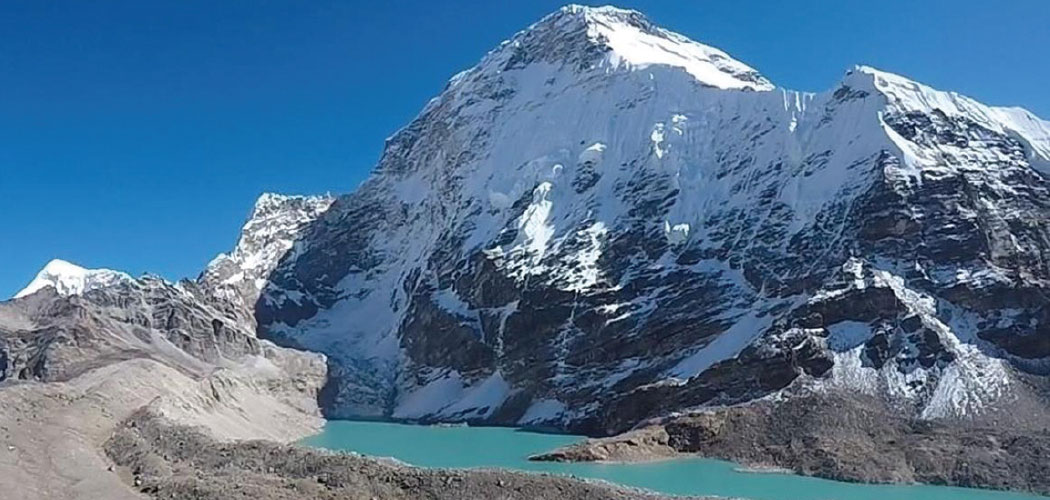
A central component of the project is the planned lowering of water levels in four high-altitude glacial lakes -- Dona, Lumding Tsho and Lower Barun -- by three metres each, and Hongu 2 by one metre. Beyond lake lowering, the project will strengthen climate-risk information and planning, expand hydrological and meteorological monitoring, and establish and improve early warning systems. It will also introduce nature-based solutions and protective infrastructure to reduce downstream flood risks in the watersheds.
Speaking at the inception workshop, Nabin Raj Singh, Secretary, Water and Energy Commission Secretariat at Ministry of Energy, Water Resources and Irrigation, “We will prioritise an integrated and collaborative approach to ensure the timely and effective implementation of this flagship project.
“As part of this effort, we aim to develop CHWRR into a centre of excellence while strengthening engagement with hydropower developers, the wider private sector and other key stakeholders to ensure the project delivers sustainable, long-term impact,” said.
“The devastating floods we witnessed just two months ago in the Rasuwa-Bhotekoshi and Gandaki basin reminded us how quickly climate-related extreme hazards can become humanitarian and economic disasters. They also reinforce a simple but important message: we cannot wait for the next disaster to take action,” said Kyoko Yokosuka, UNDP Resident Representative in Nepal.
“For UNDP, this is the most important strategic value of the GLOF Sanjibani Project. It gives us an opportunity to move from responding to disasters towards anticipating risk, reducing it, and protecting development investments before disasters happen,” she said.
Bappon Fakhruddin, Climate Investment Principal at the GCF Secretariat, said, “GLOF-Sanjibani should be treated as a scale up project that will enable more diverse transboundary resilience cooperation and larger opportunities in terms of livelihoods, finance, business and partnerships within national ecosystems.”
Sanjeeb Baral, Executive Director of the Centre of Hydrology and Water Resources Research (CHWRR), said, “Glacial lakes are ticking time bombs as mountains are changing rapidly. A small breach can cause losses of hundreds of billions of dollars. Hence, the lowering of lakes should be done urgently, with proper safety precautions and in accordance with environmental and social safeguards to ensure better implementation.”
“Strengthening early warning systems means ensuring that science-based information reaches communities well in advance, enabling them to take timely action before hazards turn into disasters,” said Dr. Dharam Raj Uprety, Chief Executive of the National Disaster Risk Reduction and Management Authority (NDRRMA).
The workshop brought together senior government officials, representatives from the Green Climate Fund (GCF) and UNDP, local authorities, technical experts, and development partners to solidify implementation priorities and coordination mechanisms.
The GLOF Sanjibani Project is being implemented through the Centre of Hydrology and Water Resources Research (CHWRR) under the Ministry of Energy, Water Resources and Irrigation, in collaboration with the Department of Chure and Critical Watershed Conservation (DCCWC), the Department of National Parks and Wildlife Conservation (DNPWC), and the NDRRMA. Key partners also include the Ministry of Finance, the Nepal Tourism Board, and the Independent Power Producers' Association, Nepal