




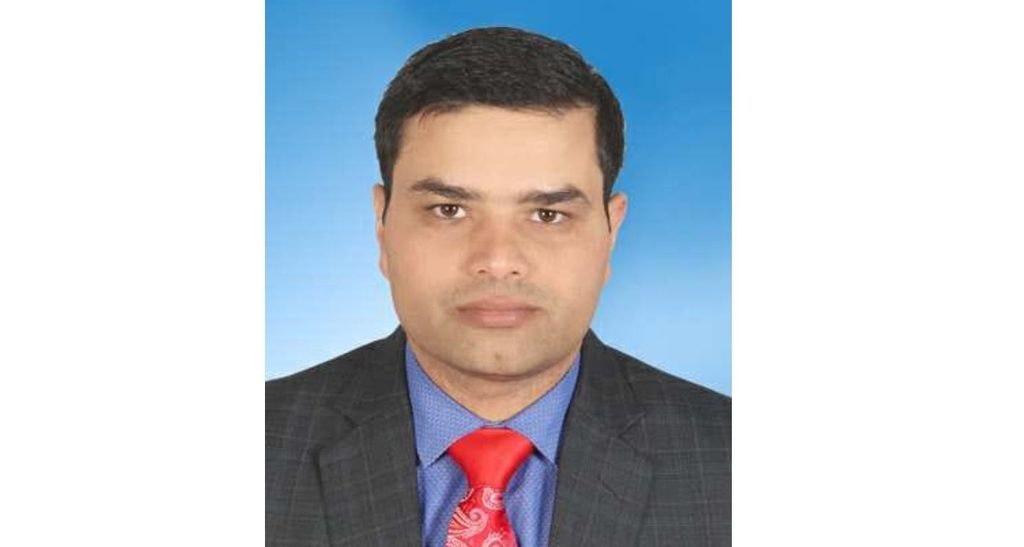
Melsam Ojha
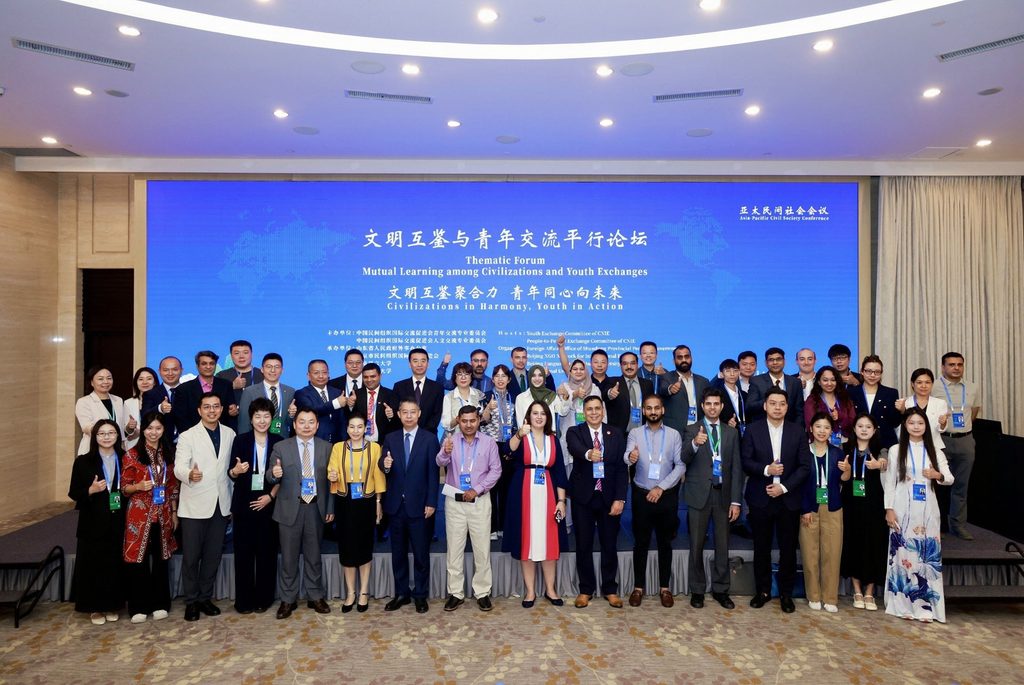
SATV, Kathmandu, Oct.7- On September first week, I attended Asia-Pacific Civil Society Conference that gave me an opportunity to look at China from a perspective that is difficult to gain through books, reports or statistics alone. I visited communities, institutions, industries, museums, paddy fields and cultural heritage in Shandong, Jilin and Beijing and derived the facts that China’s transformation is not based on one single achievement. Rather, it is the result of the simultaneous development of history, infrastructure, technology, agriculture, community services, human resources and international cooperation.
China has given emphasis on people-to-people exchanges, civil society cooperation and regional partnership. More than 300 delegates from dozens of countries; social organizations and enterprises from China within participated in the conference. The Chinese high ranking officials such as Xiao Jie, Vice Chairman of the Standing Committee of the 14th National People’s Congress called for dialogue, mutual understanding and stronger cooperation among Asia-Pacific societies.
The humanitarian discussions were equally relevant. As a Nepali participant, I also expressed appreciation for China’s support and cooperation in relation to a glacier-related disaster in Nepal; along with my views on mutual learning among civilizations and people to people connectivity and exchanges. For a disaster-prone country such as Nepal, stronger regional cooperation in research based early warning, emergency response, rescue technology and humanitarian assistance is essential.
One of the most important messages that I perceived from the journey is that we should emphasize practical cooperation, mutual benefit, development, service delivery and long term relationships rather than emphasize on rights and advocacy only. It cannot be sustained by governments alone. Hereby, civil society organizations, communities, educational institutions, businesses and ordinary citizens all have to play important roles.
Development that serves people
A visit to the Shunjing Community Party Service Station in Jinan offered an interesting example of grassroots public services. The facility functions as a bridge between residents and public institutions, helping people access information, assistance and community activities. The visit demonstrated how community-level structures can make public services more accessible and responsive.
I found this particularly relevant. Nepal has thousands of community organizations, local governments and civil society groups working at the grassroots. The challenge is often not the absence of organizations but the coordination among them. China’s experience suggests that community services can become more effective when local institutions, citizens and service providers are connected through organized platforms.
Another important lesson came from the Jiunvfeng Rural Revitalization Demonstration Zone in Tai’an. The area has combined modern agriculture, tourism, traditional culture, entrepreneurship and ecological resources to generate employment and income. The zone has attracted investment, developed agricultural products and created employment opportunities for villagers close to their homes.
Nepal has enormous potential for a similar approach. Our villages possess agricultural resources, forests, mountains, cultural traditions, religious sites and natural beauty. Yet these resources are often treated separately. China’s rural revitalization experience suggests that agriculture, tourism, entrepreneurship and cultural heritage can be developed together to create local economic opportunities.
Technology as a tool for everyday life
Another striking aspect of the China experience was the integration of technology into ordinary life. The digital payments, modern public transportation, high-speed rail and digitally supported services as features that have become part of everyday life. The journey between cities demonstrated that connectivity in China is not simply about roads and railways; it is also about digital systems and the efficient movement of people, information and services. This offers an important lesson for Nepal. We do not necessarily have to reproduce China’s infrastructure on the same scale. Instead, we can identify technologies appropriate to our own circumstances. The expansion of digital public services, electronic payments, smart agriculture, online education and better transport information systems could significantly improve the daily lives of Nepali citizens.
The universities, research institutions and industries have emphasized cooperation for research, manufacturing and practical application to achieve progress in robotics, automation and intelligent manufacturing.
This is an area where Nepal needs to invest more seriously. Our universities should not remain disconnected from the productive economy. Research should have people in its core and then it will be able to address Nepal’s practical challenges in agriculture, hydropower, tourism, construction, disaster management, health and
information technology.
Agriculture: from production to value addition
I visited Jilin Agricultural University where the research into the processing and value addition of corn, including the development of food products and the comprehensive utilization of agricultural by-products were carried out. I learnt that the farmers are engaged in fields in producing raw agricultural commodities but cooperation between universities and its research wing; and industries can generate greater value through processing, packaging, technology, branding and market access.
Nepal produces rice, maize, tea, coffee, fruits, vegetables, herbs and many other agricultural products. Yet a considerable portion of their potential value is lost because processing industries, storage facilities and market linkages remain limited. The cooperation of Nepali social organization, universities, and municipalities with their counterparts in China could help Nepal strengthen research, food processing and agricultural entrepreneurship.
The Beijing Agriculture Vocational College and FALCON in Mauritius have jointly carried out “small but beautiful” livelihood project. It is heavily focusing on organic farming, capacity building for small and medium-scale farming communities, and introducing climate-smart agriculture to ensure local food safety and security.
Green infrastructure and energy
The visit to Taikai Group demonstrated another dimension of China’s development: the combination of manufacturing, technological innovation and green development. The company has developed power transmission and transformation equipment and maintains a substantial research and innovation network. On the same day, we visited to Shandong Lude New Material that uses advanced geosynthetic materials in water management, roads, railways, tunnels and environmental projects.
Nepal is frequently exposed to landslides, floods, earthquakes and other natural hazards needs infrastructure that is both resilient and environmentally responsible. Nepal can benefit from international cooperation in modern construction materials, slope stabilization, water management, transmission systems and green infrastructure.
Connectivity, culture and mutual understanding
The China experience was not limited to factories and technology. Visits to historic Qushuiting Street and Baotu Spring in Jinan demonstrated the coexistence between cultural heritage, tourism and modern urban development.
Nepali cultural heritage is one of our greatest national assets. Kathmandu Valley, Lumbini, Janakpur, Pokhara, Mustang, Bardiya and countless other destinations offer enormous opportunities. Tourism development should therefore be linked with heritage preservation, local employment and modern services rather than treating culture merely as something to be displayed.
The vivid presentation on the Belt and Road Initiative by Dr. Sun Jingying, Deputy Chief of Staff at the National Institute for Global Strategy, Chinese Academy of Social Sciences (CAS) also emphasized connectivity, trade, investment and people-to-people relations. The connectivity of Nepal with China should be approached not merely as physical infrastructure but as an opportunity for trade, tourism, education, technology transfer and cultural exchange.
A lesson for Nepal
My most important takeaway from the visit is to serve people through cooperation and development. The discussions and observations during visit emphasized mutual respect, cultural diversity, dialogue, learning among civilizations, cooperation and development. Nepal, too, can develop through cooperation with Chinese institutes to turn agricultural resources into higher value products and serve grass-root peasants while preserving its own identity, traditions and social values. Likewise in education, technology, tourism, disaster management and clean energy. We can learn from China’s experience without attempting to copy China’s model. It would obviously generate employment for youths that would lessen the migration abroad.
However, the patience, learning trend rather than populism, hard work and cooperation of Nepali youth is must. The Nepali youth should be able to combine knowledge, skill, attitude, innovation, people’s participation, regional cooperation with determination and long term vision.
(Mr. Ojha is the Founder and Chairman of Nepal China Academy & Friendship & Development Foundation. He can be reached via email: info@fdf.org.np)