




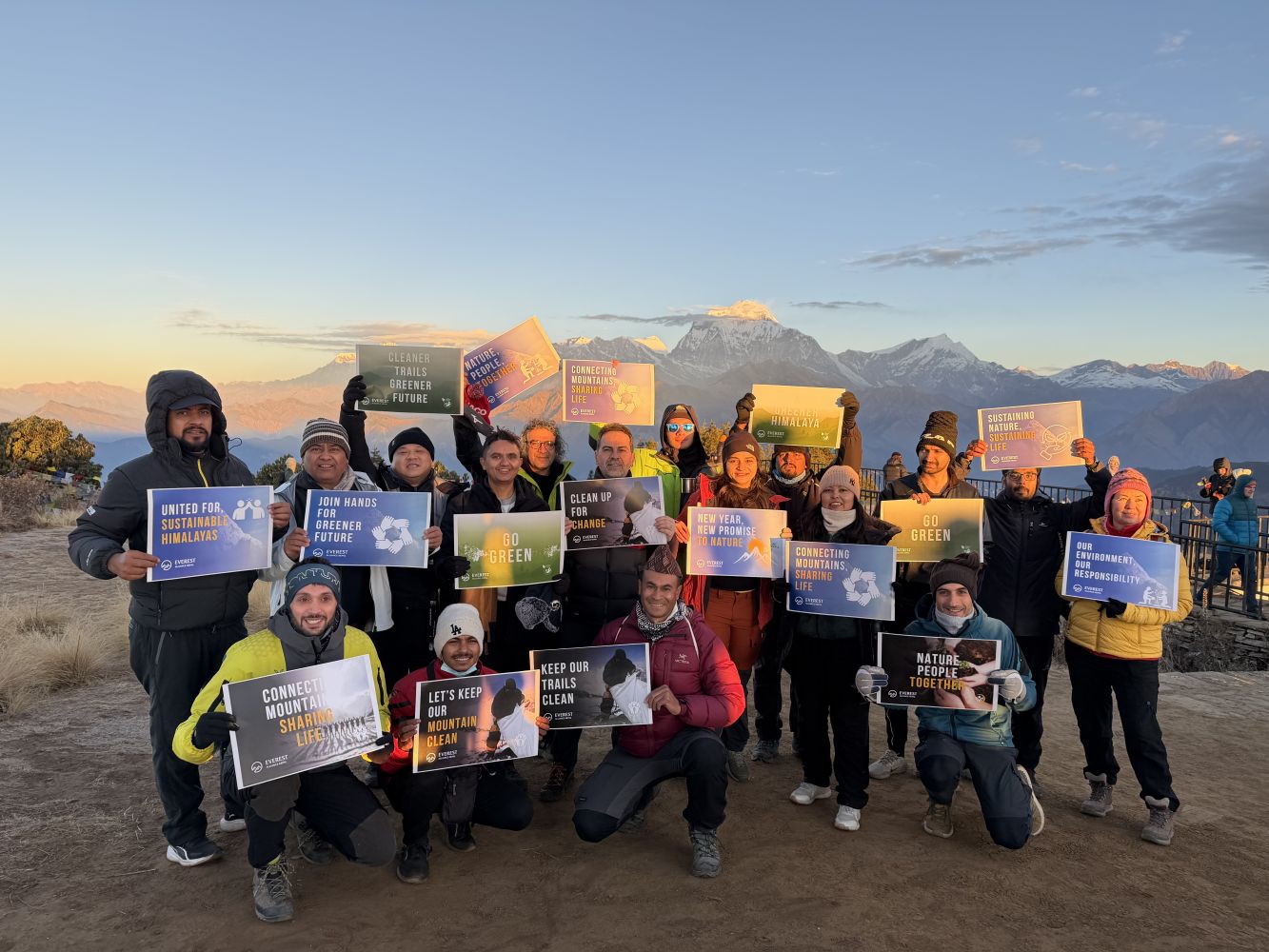
SATV,5 jan : Everest Alliance Nepal (EAN), an organization committed to environmental preservation, climber safety, and ethical practices in Himalayan mountaineering, has ushered in the New Year 2026 with an ambitious series of formal programs across Nepal’s most revered and heavily trafficked trekking routes. These efforts targeted the Everest Base Camp Trail, Annapurna Base Camp Trail, Tilicho Lake Trekking Trail, and Ghorepani Poon Hill Trekking Trail. By mobilizing over 150 dedicated national and international volunteers, the initiative aimed to promote awareness of waste management and sustainable tourism in the region’s high-altitude hotspots, which attract thousands of adventurers annually and face growing threats from climate change and tourism. While participants across all trails delivered powerful New Year’s messages on maintaining clean trails, the hands-on clean-up activities were conducted exclusively along the Ghorepani Poon Hill Trekking Trail in coordination with the National Trust for Nature Conservation (NTNC).
The program’s focal point was the targeted clean-up on the scenic Ghorepani Poon Hill - Annapurna Base Camp Trekking Trail, located within the protected Annapurna Conservation Area. This segment was spearheaded by a team featuring Everest Alliance Nepal President Mr. Sudarshan Nepal; Chief Advisor Mr. Achyut Guragain; and Mr. TANG Xuechao, Liaison & Outreach Coordinator for the International Mountain Tourism Alliance (IMTA), bringing a global perspective to local challenges. Enhancing the international flavor, the group included Everest Alliance Nepal’s Country Representatives: Mr. Nasuh Mahruki from Turkey, a distinguished Everest summiteer who has conquered the peak from both its north (Chinese) and south (Nepalese) sides, and Mrs. Suvidha Kadlag from India, another accomplished Everest summiteer whose experiences underscore the cross-cultural bonds in mountaineering. The endeavor was bolstered by key partners, including Pelliot as the official gear and equipment sponsor, providing essential outdoor apparel and tools to ensure participant safety and efficiency, alongside a diverse array of volunteers from various countries, symbolizing a unified front in global environmental stewardship.

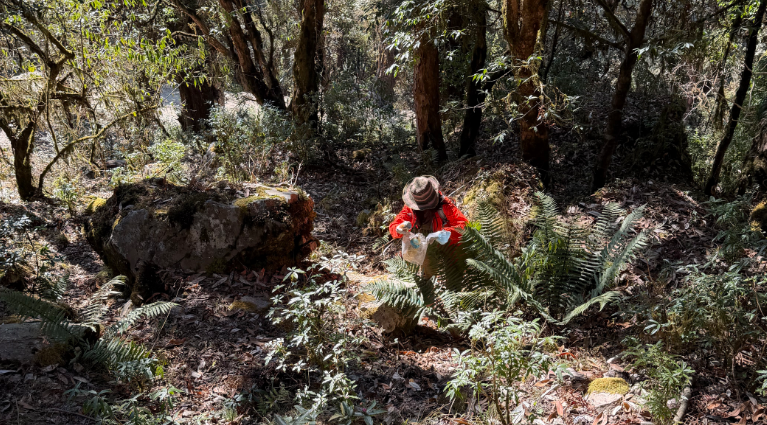
The operation on clean-up on the scenic Ghorepani Poon Hill Trekking Trail commenced with a road journey from Kathmandu on December 30, 2025, culminating in an arrival at Nangethanti on December 31, 2025, where the team prepared for the physical demands ahead. Transitioning to foot, the participants hiked toward Ghorepani, methodically scouring both sides of the trail for litter. Although the trail exhibited only minimal pollution—thanks in part to ongoing local conservation efforts—the volunteers diligently gathered non-biodegradable waste over a focused one-hour stretch, demonstrating meticulous attention to even small accumulations that could compound over time. All collected materials were responsibly handed over to the established garbage collection center in Ghorepani, ensuring they entered a proper waste stream rather than lingering in the ecosystem. This act, while modest in scale, served as a poignant symbol of the program’s overarching goal: transcending mere garbage removal to broadcast a compelling New Year’s message across the trekking community. Directed at tourists, trek operators, trail managers, destination managers, hotel operators, and the broader public, the message highlighted the importance of keeping trails clean, the escalating environmental hurdles in Nepal’s trekking corridors—such as plastic pollution, habitat degradation, and water contamination—their ripple effects on indigenous communities reliant on tourism for livelihoods, and the imperative to safeguard the Himalayas’ delicate ecosystems through collective, proactive measures.
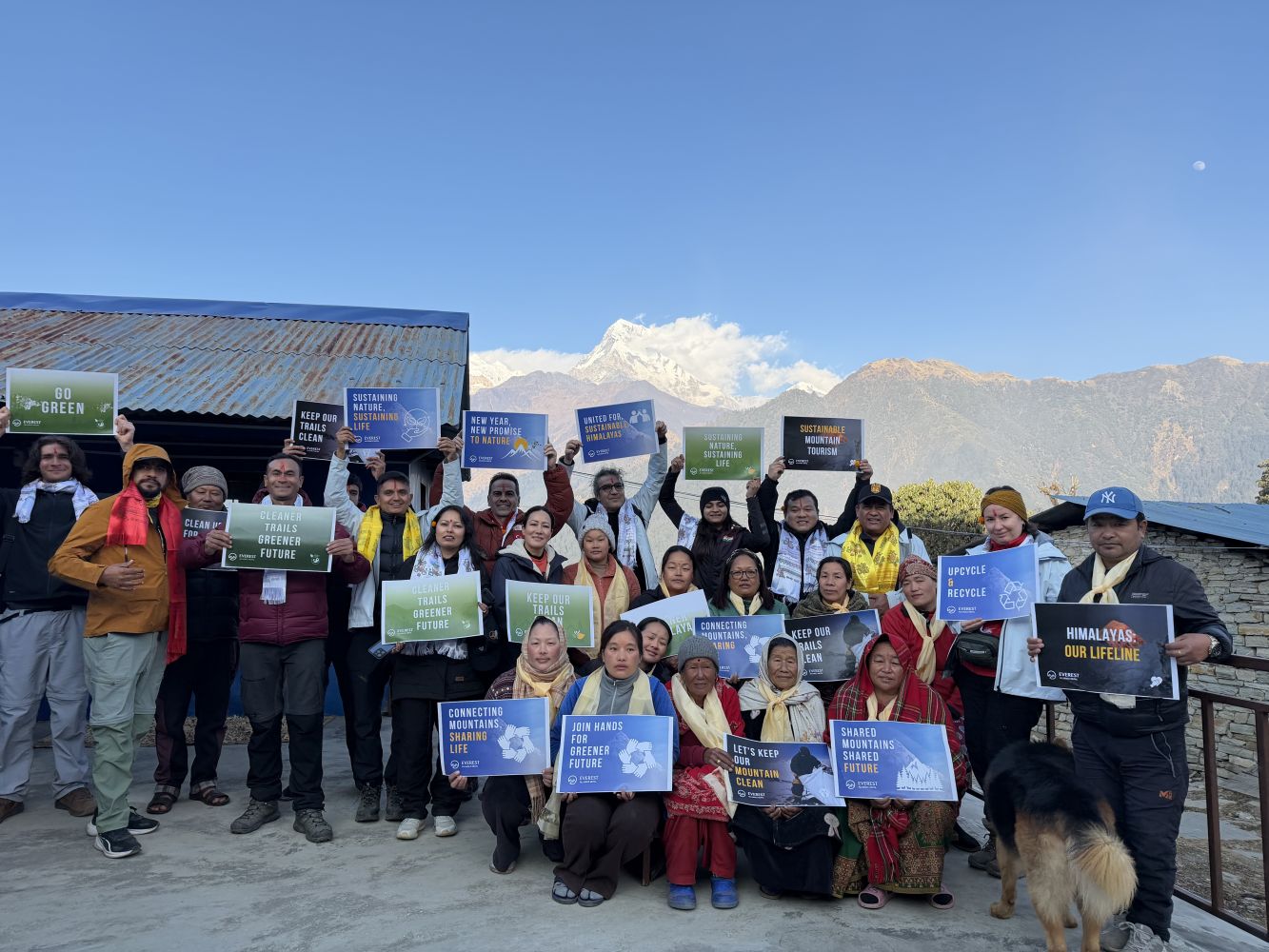
Integral to the initiative’s success was robust community engagement, fostering dialogue and empowerment at the grassroots level. The team organized an in-depth interactive session with representatives from the local Aama Samuha (Mothers’ Group), a vital community organization promoting women’s roles in conservation, and the Hotel Management Committee, which oversees accommodations along the trail. Discussions delved into effective solid waste management tactics tailored to the trail and adjacent destinations, revealing insights into local realities. Participants from these groups candidly shared that garbage collection itself poses few obstacles, but the absence of adequate infrastructure for disposal, recycling, or upcycling creates persistent bottlenecks, often leading to improper handling or environmental harm. They advocated strongly for the creation of a dedicated, permanent waste processing center in the region to enable efficient, eco-friendly solutions like converting plastics into reusable materials or composting organics. Everest Alliance Nepal officials, demonstrating genuine empathy and commitment, actively listened to these voiced concerns and formally pledged organizational support—potentially through expertise or partnerships—to bolster upcoming community-driven projects aimed at resolving these systemic issues.
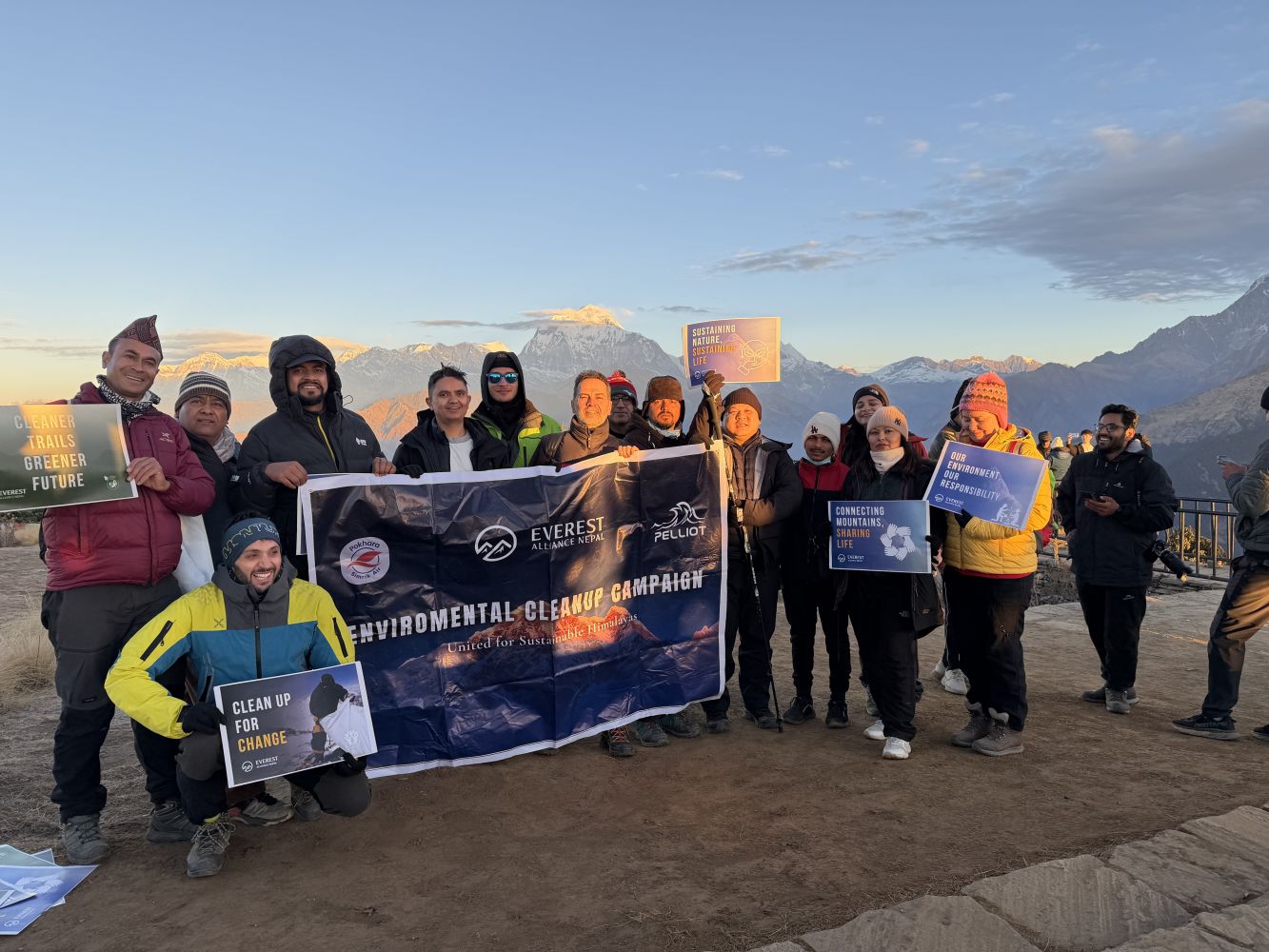
The event reached its inspirational climax on January 1, 2026, as the Ghorepani team ascended to the iconic Poon Hill viewpoint, perched at 3,210 meters above sea level, to witness a spectacular New Year sunrise that painted the snow-capped peaks in hues of gold and pink. Here, amid this natural splendor, they delivered a resounding message on sustainable tourism and clean trails, emphasizing responsible practices like “leave no trace” principles and community-inclusive development. Echoing this sentiment, all other participants—who visited the Everest Base Camp Trail, Annapurna Base Camp Trail, and Tilicho Lake Trekking Trail without conducting clean-up activities—shared similar New Year’s messages on maintaining clean trails from their respective locations at that time, creating a chorus of advocacy that resonated from the Everest region to the Annapurnas. This harmonious blend of environmental activism and the timeless allure of Himalayan tourism vividly illustrates Everest Alliance Nepal’s dedication to cultivating resilient, eco-conscious approaches that balance adventure with preservation in Nepal’s mountainous terrains.

“Everest Alliance Nepal’s programs transcend simple litter collection; they represent a vital call to action for sustainable tourism that preserves our invaluable natural heritage for future generations,” stated Everest Alliance Nepal President Mr. Sudarshan Nepal. “Through collaborations with international experts, local communities, and partners, we are forging a worldwide alliance to confront the dual threats of climate change and waste accumulation in the Himalayas, ensuring these majestic landscapes endure.”
This drive seamlessly integrates with Everest Alliance Nepal’s broader portfolio of activities, such as the highly anticipated second edition of the Everest Summiteers Summit scheduled for May 2026 in Kathmandu. This global forum will convene Everest climbers, conservationists, and stakeholders to explore cutting-edge solutions for climate adaptation, ethical tourism, and ecosystem restoration. By spearheading such multifaceted programs, Everest Alliance Nepal solidifies its role as a frontrunner in advancing climber safety, environmental integrity, and responsible tourism within one of the planet’s most fragile and awe-inspiring mountain realms.
About Everest Alliance Nepal (EAN)
Everest Alliance Nepal is a dynamic, Nepal-based organization devoted to upholding the storied legacy of Mount Everest and the expansive Himalayan region. Through targeted advocacy, educational outreach, and collaborative gatherings, Everest Alliance Nepal prioritizes climber safety, environmental sustainability, and pioneering responses to pressing issues like climate change and the strains of tourism. For further details, please visit everestalliancenepal.org or reach out via info@everestalliancenepal.org.